Seasonal Dog Apparel for Summer Heat Protection: A Guide
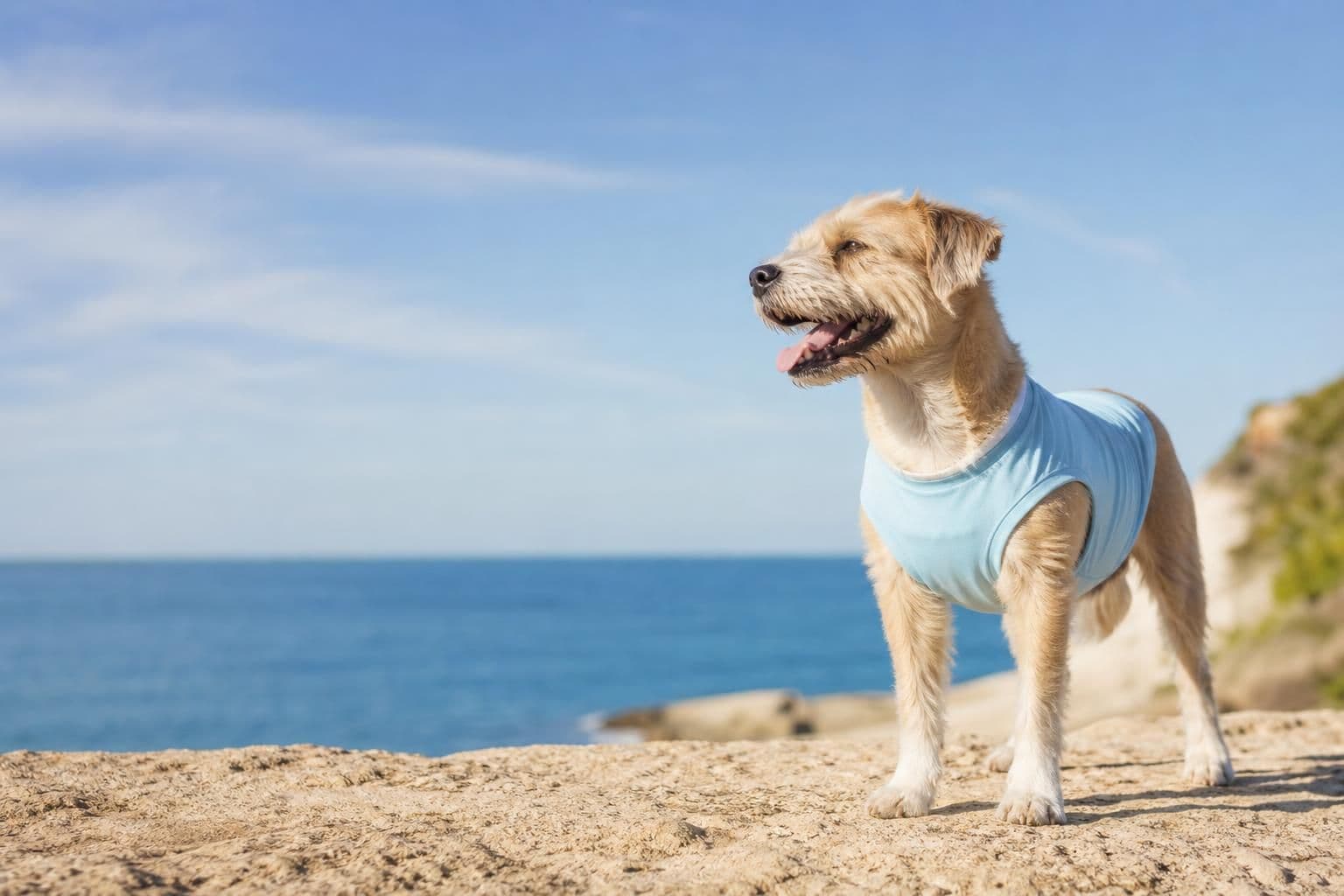
Key takeaway
Seasonal dog apparel for summer heat protection works by blocking UV rays and reflecting sunlight rather than by cooling the dog down the way shade or water does. Lightweight, breathable, light-colored fabrics with a loose weave protect skin and coat from sunburn and UV damage on exposed areas like the belly, nose bridge, and thinly-furred ears, but they don't lower body temperature on their own. The most effective summer strategy pairs light protective layers with shade, hydration, and activity timing, not clothing alone.
Key takeaways
- Sun-protective dog apparel should be lightweight, light-colored, and loose-woven — not insulating or snug like winter sweaters.
- Clothing helps prevent sunburn and UV exposure; it does not replace shade, water access, or avoiding peak-heat walks for actual cooling.
- Correct fit matters for summer gear just as much as winter gear — a shirt that's too tight traps heat against the skin instead of allowing airflow.
What "summer protection" clothing actually does
Dog skin can sunburn, especially on dogs with thin or light-colored coats, pink skin, or areas where fur is naturally sparse — the belly, groin, nose, and ear tips. A breathable fabric layer acts like a physical sunscreen, blocking ultraviolet rays from reaching the skin. The American Veterinary Medical Association notes that dogs with light or thin coats are more prone to sunburn and skin damage from UV exposure, which over time can contribute to skin problems in vulnerable breeds.
What summer apparel does not do is actively cool a dog down. Dogs regulate heat mainly through panting and limited sweating through their paw pads, so no garment substitutes for water, shade, and rest breaks during hot hours.
Fabrics and features that actually help
Not all "summer" labeled apparel is created equal. Look for:
- Loose, breathable weaves (cotton blends, mesh panels) that let air circulate against the skin rather than trapping heat.
- Light colors, which reflect sunlight instead of absorbing it the way dark fabrics do.
- UV-rated fabric where available — similar to how UPF-rated human sun shirts work, some pet fabrics are woven densely enough to block a measurable share of UV rays while still staying light and airy.
- Minimal coverage design — a thin belly band or light shirt rather than a full-body suit, so airflow isn't restricted.
Avoid anything marketed as a "cooling sweater" or heavily padded — insulation is insulation regardless of the season it's sold in.
Getting the fit right matters more in summer
A garment that's too tight compresses fur and traps a layer of warm air against the skin, working against the cooling effect you want. One that's too loose can bunch up, restrict leg movement, or slip and expose the exact skin you were trying to protect. This is why Ziva Paws measures clothing by actual chest, neck, and back-length inches instead of generic S/M/L labels — a "medium" varies wildly between breeds, and a half-inch of slack in a lightweight summer shirt can be the difference between airflow and a hot, clingy garment. If your dog already resists wearing gear, it's worth reading why some dogs refuse to wear booties before assuming a shirt will be any easier — introducing any new apparel gradually tends to go better than forcing it on all at once.
When clothing isn't the right tool
Apparel is one piece of a larger heat-safety picture, not the centerpiece. The basics that do the actual cooling work:
- Shade and airflow — a covered, ventilated resting spot beats direct sun every time.
- Constant water access — check bowls more often in heat since dogs drink more and water warms faster outdoors.
- Timing walks around the coolest parts of the day, which also ties into general exercise needs for dogs, since shorter, cooler sessions are often better than skipping exercise entirely in summer.
- Paw protection on hot pavement — asphalt can reach far higher than air temperature, and the CDC has noted that pavement surface temperatures can exceed ambient air temperature significantly on sunny days, which is relevant to paw pad burns, not just coat protection.
- A cooling surface for downtime, separate from clothing — a dedicated cooling mat handles active heat dissipation, which apparel simply isn't designed to do.
Watch for early signs of overheating regardless of what your dog is wearing: heavy panting that doesn't ease up, bright red gums, stumbling, or excessive drooling. The AVMA lists these among the warning signs of heatstroke that warrant immediate shade, water, and veterinary attention.
Seasonal apparel beyond just shirts
Summer dog wardrobes typically include a few more pieces than just a cooling shirt:
- Lightweight bandanas or scarves for light sun coverage on the neck without full coverage.
- UV-blocking vests for dogs who swim or spend long hours outside at dog-friendly beaches or trails.
- Breathable harness-compatible shirts that don't bunch under straps.
If you're also shopping seasonally for costume or event wear later in the year, the same inch-based sizing logic applies — our guide on choosing a dog costume with the right fit covers measuring technique that works for any season, not just Halloween.
Frequently Asked Questions
Q: Does dog clothing actually keep dogs cool in summer?
Not directly — it blocks UV rays and prevents sunburn, but dogs cool down through panting and shade, not through fabric. Clothing is a sun-protection tool, not a cooling tool.
Q: What fabric is best for a dog shirt in hot weather?
Lightweight, loose-woven, light-colored breathable fabric like cotton blends or mesh works best, since it allows airflow while still covering exposed skin from UV rays.
Q: Can summer apparel cause a dog to overheat?
Yes, if the garment is tight, dark-colored, or made of thick material, it can trap heat against the skin and work against the dog's natural cooling. Fit and breathability matter as much as the "summer" label.
Q: Which dogs need sun-protective clothing most?
Dogs with thin or light-colored coats, pink or exposed skin, or breeds prone to sunburn on the nose and belly benefit most from lightweight protective layers during peak sun hours.
Q: Is a cooling mat better than a cooling shirt?
They serve different purposes — a cooling mat actively helps lower body temperature during rest, while a shirt mainly protects skin from UV exposure during activity. Many owners use both.