How Much Should I Feed My Puppy? A Simple Feeding Guide
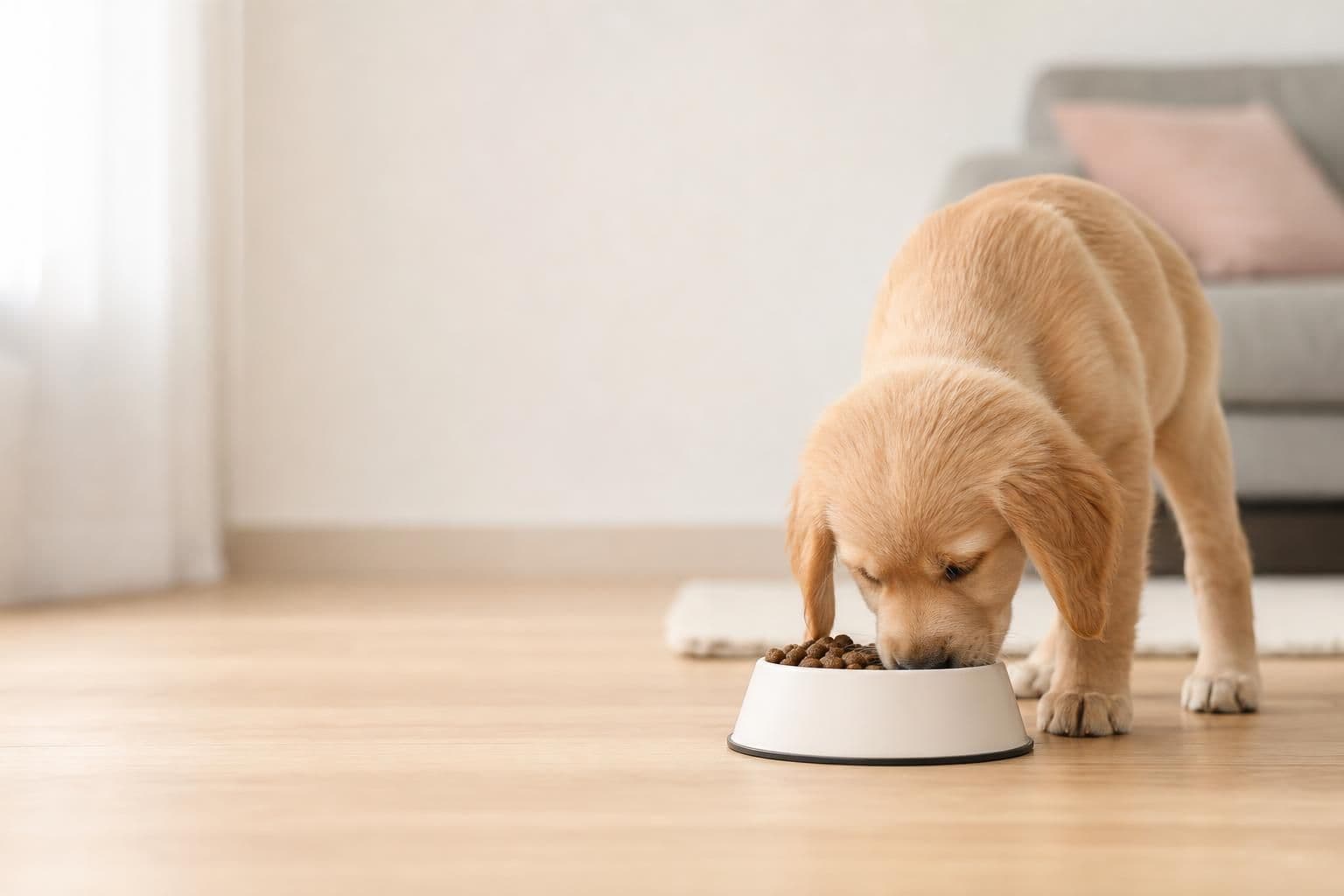
Key takeaway
Most puppies need to eat 3-4 times a day until around six months old, then 2 times a day into adulthood, with the actual portion size based on their current weight, expected adult size, and the calorie content of their specific food. There's no single daily gram amount that fits every puppy — the feeding guide on the back of your dog food bag, adjusted for your puppy's body condition, is the most reliable starting point. Checking in every two to four weeks and adjusting portions as your puppy grows matters more than hitting an exact number on day one.
Key takeaways
- Feed puppies 4 meals/day at 8-12 weeks, 3 meals/day at 3-6 months, and 2 meals/day after 6 months.
- Use your food's feeding chart based on current weight and expected adult weight, not a one-size guess.
- Check body condition every 2-4 weeks — you should feel ribs easily but not see them.
Why puppies need a different feeding schedule than adult dogs
Puppies have small stomachs but high energy demands for bone, muscle, and organ growth, which is why they do better on frequent, smaller meals rather than one or two large ones. A puppy that goes too long between meals can also experience blood sugar dips, especially in toy and small breeds. As they mature, their digestive capacity grows and their metabolism slows slightly, allowing meals to be consolidated.
A general age-based schedule looks like this:
- 8-12 weeks: 4 meals per day
- 3-6 months: 3 meals per day
- 6-12 months: 2 meals per day
- Over 12 months (or earlier for large breeds, per your vet): transition to adult feeding, often 1-2 meals per day
This schedule lines up closely with other early-life milestones, like the routines used in crate training a puppy, where predictable meal times also help build a predictable bathroom schedule.
How to figure out the right portion size
Start with the feeding chart printed on your puppy's food packaging — it's based on the food's actual calorie density, which varies a lot between brands. Find your puppy's current weight on the chart, not their expected adult weight, and use that as your daily total, then split it across the number of meals for their age.
From there, adjust using what you see and feel:
- Look from above. Your puppy should have a visible waist behind the ribs.
- Feel the ribs. You should be able to feel them under a light layer of fat without pressing hard.
- Check energy and stool. Consistent energy and firm, regular stools are good signs the portion is working.
If your puppy is gaining weight too fast or looking thin despite eating the recommended amount, adjust the total daily portion by small increments (around 10%) and recheck in a week rather than making a large change all at once.
Large-breed puppies need extra care
Large and giant-breed puppies (think future 70+ lb adult dogs) are commonly fed a food specifically formulated for large-breed growth, because growing too fast on a calorie-dense diet has been linked to skeletal problems like hip dysplasia and other joint issues later in life. This is one of the few areas where veterinary nutrition groups are specific: slow, steady growth is safer than fast growth for big-breed puppies. The World Small Animal Veterinary Association publishes global nutrition guidelines that many vets use as a reference point for growth-rate feeding in large breeds.
If you're raising a large-breed puppy, it's worth asking your vet whether your current food and portion are matched to a large-breed growth curve, not just a generic puppy formula.
Wet food, dry food, and mixed feeding
Dry kibble, canned wet food, and mixed feeding are all workable choices — what matters is that the total calories match your puppy's needs, since wet food is more water by volume and usually requires a larger serving size than kibble to deliver the same calories. If you switch foods or brands, do it gradually over 5-7 days, mixing increasing amounts of the new food with the old, to reduce the chance of an upset stomach.
Whichever food you choose, a feeding setup matters too. A slow feeder bowl can help puppies who gulp their food, and puppies that finish fast sometimes benefit from a puzzle-style feeder that slows them down and adds a bit of mental work to mealtime — both are worth a look in Ziva Paws' feeding collection if your current bowl setup isn't working well.
Treats, table scraps, and the 10% rule
A commonly used guideline from veterinary nutritionists is that treats — including training treats — should make up no more than about 10% of a puppy's total daily calories, with the rest coming from a complete and balanced puppy food. This matters more than it sounds like during training-heavy stretches, like potty training, when treats can add up fast without an owner noticing. Table scraps aren't a reliable way to supplement nutrition and can throw off the calorie balance your puppy's food was formulated to provide.
Signs you're over- or under-feeding
- Overfeeding signs: no visible waist, ribs hard to feel, low energy after meals, loose stool
- Underfeeding signs: visible ribs or spine, hip bones prominent, low energy, excessive begging or scavenging
- Both: a sudden change in appetite or stool consistency is worth a call to your vet, since it can signal something unrelated to portion size
Puppies also tend to be more food-motivated right after exercise, so if yours seems constantly hungry, it's worth checking whether their daily exercise load has increased rather than assuming the portion itself is wrong.
When to talk to your vet
Your vet is the best resource for adjusting feeding around medical issues, spay/neuter timing, or breed-specific growth concerns, and most recommend a weigh-in at each puppy vaccination visit to track growth against a normal curve for their breed and size. The American Veterinary Medical Association and the American Kennel Club both publish general puppy care resources that are useful starting points if you want to read further before your next appointment.
Frequently Asked Questions
Q: How many times a day should I feed my puppy?
Most puppies do best on 4 meals a day from 8-12 weeks, 3 meals a day from 3-6 months, and 2 meals a day from 6 months onward. Toy and small breeds sometimes stay on 3 meals a day longer to avoid blood sugar dips between meals.
Q: How do I know if I'm feeding my puppy too much?
Signs of overfeeding include no visible waist when viewed from above, difficulty feeling the ribs under a light press, low energy after meals, and loose stool. If you see these signs consistently, reduce the daily portion by about 10% and reassess after a week.
Q: Should I free-feed my puppy or feed on a schedule?
Scheduled meals are generally recommended over free-feeding because they make it easier to track how much your puppy actually eats, spot appetite changes early, and support a predictable potty routine. Free-feeding also makes portion control and weight tracking much harder.
Q: Do large-breed puppies need a different amount of food?
Large and giant-breed puppies are usually fed a food formulated for large-breed growth and are kept on a slower, steadier growth curve, since rapid growth has been linked to joint and skeletal problems later in life. A vet can help confirm whether your puppy's current food and portions match a large-breed growth plan.
Q: Can treats count toward my puppy's daily food amount?
Treats, including training treats, should generally stay under about 10% of a puppy's total daily calories, with the rest coming from a complete and balanced puppy food. If training sessions are frequent, consider using a portion of the puppy's regular kibble as training treats to avoid extra calories.