How to Crate Train a Puppy (Step-by-Step Guide)
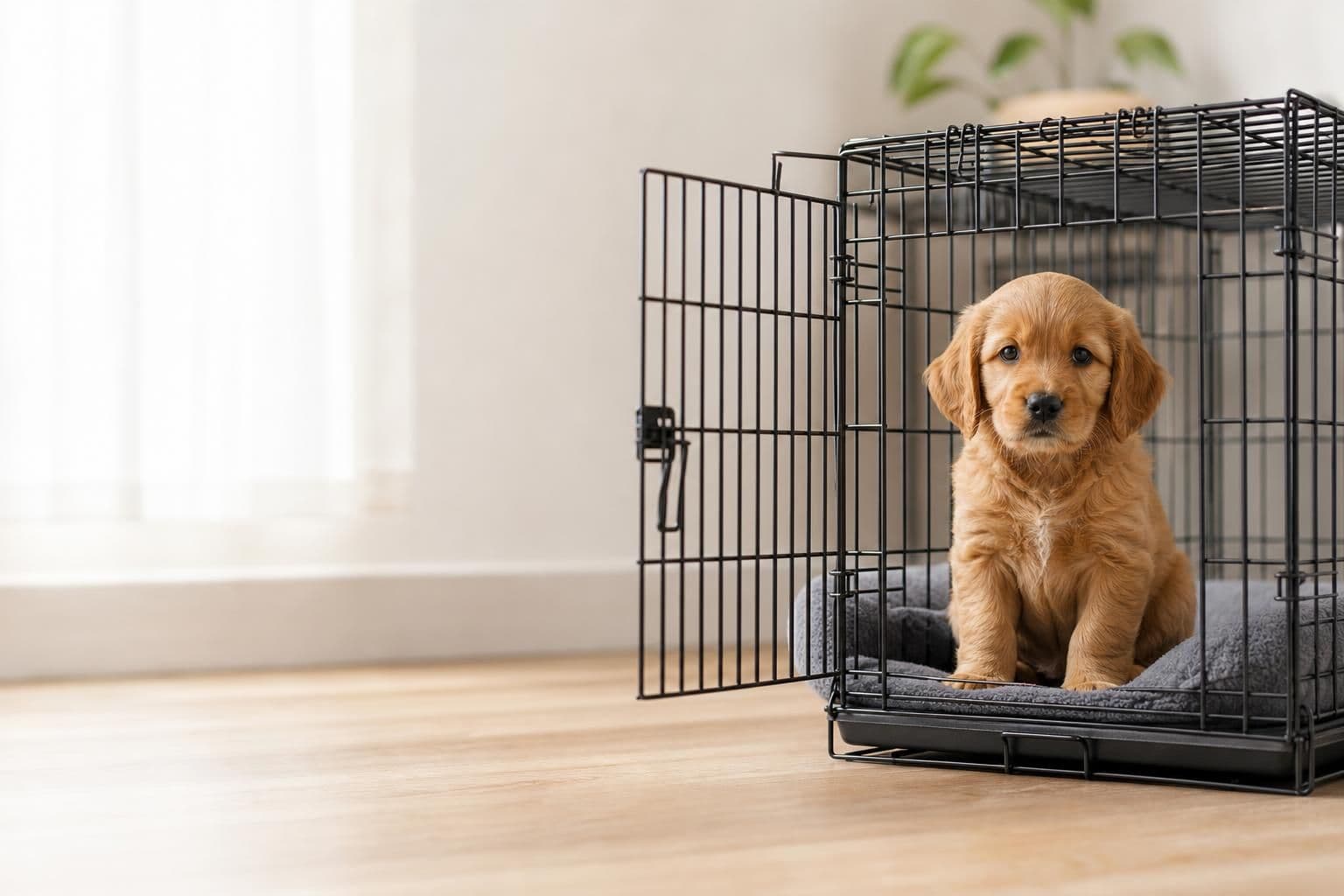
Key takeaway
Crate train a puppy by introducing the crate as a positive, low-pressure space through short, food-rewarded sessions, then gradually extending the time the door stays closed and the distance you step away. Most puppies accept a crate within one to two weeks if sessions are kept short and never used as punishment. The goal is a crate your puppy walks into voluntarily because it's associated with meals, chews, and rest, not confinement.
Key takeaways
- Introduce the crate with food and short sessions before ever closing the door.
- Match crate size to your puppy's current body, not its adult size — too much space invites accidents.
- Expect whining in the first few nights; respond to true needs, not every cry, to avoid reinforcing the noise.
Why Crate Training Works
A crate taps into a dog's natural instinct to den — to seek a small, enclosed space that feels safe rather than exposed. The American Veterinary Medical Association notes that crates, used correctly, can reduce house-soiling and destructive behavior by giving puppies a defined space they're less likely to soil, since dogs instinctively avoid eliminating where they sleep. This instinct is also the mechanism behind the method — not just convenience for the owner.
Choosing the Right Crate Size
The crate should be just large enough for your puppy to stand up, turn around, and lie down comfortably — not a room-sized enclosure. Many wire crates come with a divider panel specifically so you can resize the interior as a puppy grows, instead of buying a new crate every few months. If you're also shopping for other gear that depends on an accurate fit, like sweaters or harnesses, look for products with inch-based measurements (chest, neck, back length) rather than generic S/M/L labels, since a puppy's chest can grow unevenly compared to standard sizing charts. Ziva Paws uses this kind of inch-based sizing across its clothing line for exactly this reason.
Step-by-Step Crate Training Process
- Introduce the crate with the door open. Place treats, a chew toy, or part of a meal inside and let your puppy explore on their own terms for several days.
- Feed meals in the crate. Start with the bowl near the entrance, then move it further inside over a few days so your puppy walks fully in without hesitation.
- Close the door for short periods. Begin with 1-2 minutes while you stay in the room, then release before whining starts — not after.
- Extend duration gradually. Add a few minutes each session over a week or two, working up to 30+ minutes with you nearby.
- Practice leaving the room. Once your puppy is relaxed with the door closed and you present, step out briefly and return calmly.
- Build toward overnight use. Place the crate in or near your bedroom initially so nighttime whines can be heard and addressed quickly.
How Long Can a Puppy Stay in a Crate?
A common guideline is one hour per month of age, up to a practical daytime maximum of around 4 hours for young puppies, though this varies by individual. Overnight is different since puppies sleep for longer stretches; a well-adjusted puppy can often manage 6-8 hours overnight by around 4-5 months old, with a bathroom break built in if needed. Since crate time connects directly to a puppy's bladder control, it's worth pairing crate training with a consistent bathroom-break schedule — our guide on potty training a puppy walks through timing that pairs well with this routine.
Making the Crate Comfortable
A crate that feels like punishment will never be accepted willingly, so comfort matters as much as timing. A washable pad or a low-sided plush bed sized to the crate's floor gives a puppy something soft to settle into, and a familiar-smelling blanket can ease the transition from a breeder's or shelter's bedding. Ai and Dudu, the two resident cats who test products at Ziva Paws before they're listed, have shown that padding thickness changes how quickly a pet settles — too firm and they circle restlessly, too soft and the bed loses shape under repeated use. If you're assembling a crate setup, the beds and furniture collection includes plush and nest-style options sized for crate interiors.
Handling Whining and Accidents
Whining in the first few nights is expected and doesn't always mean distress — it can simply be protest at a new routine. The American Kennel Club recommends ignoring whining that follows a successful bathroom break and settling period, since responding to every cry can teach a puppy that noise reliably gets the door opened. If an accident happens inside the crate, it usually signals the crate is too large, the schedule has too long a gap, or the puppy was crated before fully emptying its bladder — not that crate training has failed. Cleaning thoroughly with an enzymatic cleaner removes odor cues that might otherwise draw a puppy back to the same spot.
Common Mistakes to Avoid
- Using the crate as punishment. This undoes the positive association you've worked to build and can create long-term crate aversion.
- Rushing the timeline. Jumping straight to a closed door and a full workday away is the most common reason crate training fails.
- Buying a crate sized for an adult dog without a divider. Extra space makes it easier for a puppy to soil one end and sleep in the other.
- Skipping exercise beforehand. A puppy crated right after a nap, with no chance to burn energy, is more likely to protest. Matching crate sessions to your puppy's actual exercise needs reduces restlessness.
When to Call in Extra Help
If a puppy shows signs of panic rather than ordinary protest — non-stop howling, self-injury attempts at the crate door, or drooling and panting that doesn't settle after 15-20 minutes — that's a cue to slow the process down significantly or consult a trainer or veterinarian. This pattern, sometimes linked to separation anxiety, is different from routine whining and usually needs a more gradual desensitization plan rather than simply waiting it out.
Frequently Asked Questions
Q: How long does it take to crate train a puppy?
Most puppies accept a crate within one to two weeks of consistent, short sessions, though full comfort with overnight stays can take several weeks longer depending on the individual puppy's age and temperament.
Q: Should I cover the crate with a blanket?
A light cover over the top and sides can make the crate feel more den-like and reduce visual stimulation, but leave one side uncovered for airflow and so your puppy doesn't feel fully enclosed.
Q: Is it cruel to crate train a puppy?
Crate training is not cruel when the crate is appropriately sized, never used as punishment, and time inside matches the puppy's age and bladder capacity — used this way, it mirrors a dog's natural denning instinct rather than working against it.
Q: What size crate does a puppy need?
The crate should allow the puppy to stand, turn around, and lie flat, with just enough extra room for that movement — a divider panel lets one crate grow with the puppy instead of leaving excess space that encourages accidents.
Q: Can I crate train an older puppy or adult dog?
Yes, the same gradual process works at any age, though older dogs with no crate history may need a slower introduction and more patience during the first closed-door sessions.