How Much Should You Feed a Senior Dog?
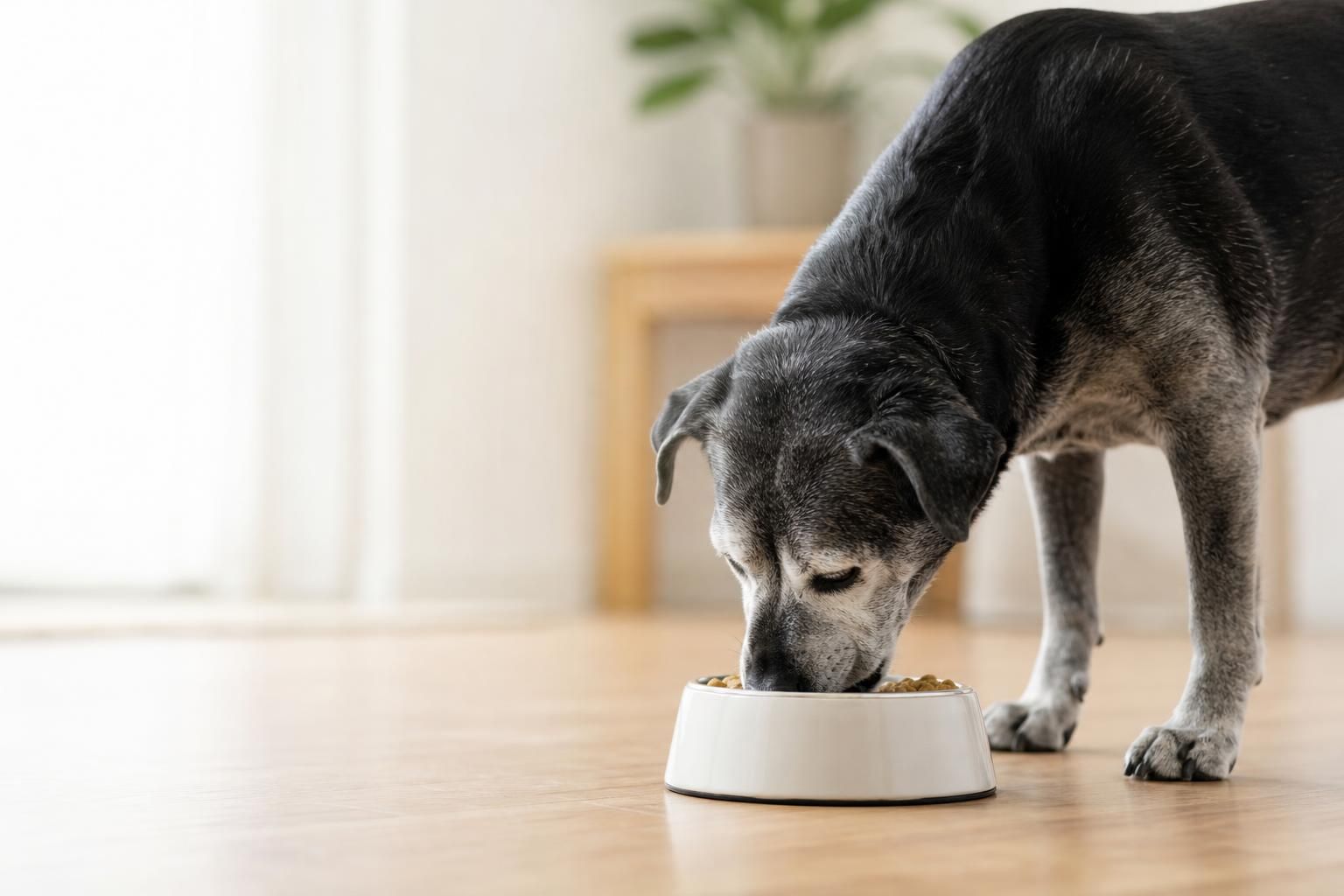
Key takeaway
Most senior dogs need roughly 20% fewer calories than they did as adults, because lower activity and a slower metabolism mean the same portion that once kept them lean now adds weight. The right amount depends on your dog's current weight, body condition, breed size, and any health conditions, so it's best calculated from their ideal weight rather than their age alone. A veterinarian can confirm a precise daily calorie target, but you can start adjusting portions at home using body condition scoring and consistent weigh-ins.
Key takeaways
- Start by cutting calories by about 10-20% from adult-maintenance amounts, then adjust based on monthly weight checks.
- Use a body condition score, not just the bathroom scale, to judge whether portions are right.
- Switch feeding method (frequency, bowl type, or formula) if your senior dog has dental, kidney, or mobility changes.
Why Senior Dogs Need Different Portions
Dogs are generally considered senior starting around 7 years old, though large and giant breeds often reach this stage earlier because they age faster than small breeds, according to guidance from the American Veterinary Medical Association. As dogs age, resting metabolic rate typically drops and many become less active, which means the calorie intake that maintained a healthy weight at age 3 can lead to steady weight gain at age 10. Extra weight on an aging joint is a bigger problem than it sounds — added pounds increase strain on joints already affected by arthritis, which is common in older dogs.
At the same time, some senior dogs lose weight due to muscle wasting (sarcopenia), reduced appetite, or underlying illness. This is why portion decisions for seniors can't be a flat percentage cut across the board — they need to be checked against your individual dog's trend over time.
Calculating a Starting Portion
A simple way to set a baseline:
- Use the feeding guide on your current food as a starting point. Most commercial dog foods include a feeding chart based on body weight, following standards set by the Association of American Feed Control Officials, which regulates how pet food labels present nutritional adequacy and feeding guidance.
- Adjust down 10-20% if your dog is less active than they used to be. A senior dog who used to run daily but now mostly walks will burn noticeably fewer calories.
- Reassess every 2-4 weeks using a body condition score and a consistent weigh-in, rather than guessing from how the dog "looks."
Body condition scoring is a hands-on method vets use worldwide: you feel for the ribs, look for a visible waist from above, and check for a tucked abdomen from the side. The World Small Animal Veterinary Association promotes a standardized 9-point scale where 4-5 is considered ideal for most dogs — ribs easily felt with a thin fat covering, visible waist, and no excess fat over the spine.
Signs You're Feeding Too Much or Too Little
Watch for these practical signals between vet visits:
- Ribs you can't feel without pressing firmly — a sign of excess weight.
- Visible rib or spine outline with no muscle coverage — a sign of being underweight or losing muscle mass.
- Increased begging or scavenging behavior paired with weight loss — worth a vet check rather than just more food, since it can signal a medical issue.
- Lethargy after meals or reluctance to finish food — may point to dental pain, nausea, or a food that's no longer appealing.
If your senior dog's water intake or urination habits are changing alongside their appetite, it's worth tracking both together — shifts in thirst, appetite, and bathroom habits often move as a set when something's off, which is also discussed in why some older dogs start having accidents on their bed.
Adjusting for Health Conditions
Several common senior conditions change the feeding math:
- Kidney disease often calls for controlled phosphorus and protein levels, typically managed with a prescription renal diet rather than simple portion reduction.
- Arthritis and joint pain benefit from keeping body weight on the lean side of normal, since every extra pound adds load to already-stressed joints.
- Dental disease can make dry kibble painful to chew, leading dogs to eat less without actually losing their appetite — softening food or switching textures can help.
- Reduced mobility from arthritis or joint stiffness often makes a soft, supportive sleeping spot just as important as diet; many owners switch to an orthopedic or bolstered bed around the same time they adjust feeding, a pairing covered in choosing the right nest bed for an aging dog.
Any dog with a diagnosed condition should be fed according to their veterinarian's specific plan rather than general guidelines, since medical diets are formulated around that condition, not just calories.
Feeding Schedule and Portion Tools
Two small meals a day is generally easier on a senior digestive system than one large meal, and it can reduce the begging that comes from a long gap between feedings. Slow feeder bowls or puzzle-style feeders can help dogs who gulp their food, which becomes more relevant with age as digestive efficiency slows. If you're also managing a multi-pet household or inconsistent schedules, an automatic feeder set to dispense a measured portion at the same times each day removes the guesswork of "did I already feed him" — a common issue when more than one person shares feeding duties. Ziva Paws' feeding collection includes slow feeder bowls and portioned dispensers that can help keep senior meals consistent day to day.
When to Call the Vet
Any unexplained weight loss or gain of more than 10% of body weight over a couple of months warrants a vet visit, not just a feeding adjustment. The same goes for sudden appetite loss lasting more than a day or two, repeated vomiting after meals, or new difficulty chewing. A vet can run bloodwork to rule out thyroid, kidney, or dental causes before you change the diet further.
Frequently Asked Questions
Q: At what age is a dog considered senior for feeding purposes?
Most dogs are considered senior starting around 7 years old, though large and giant breeds often reach this stage earlier, closer to 5-6 years, because they age faster than smaller breeds.
Q: Should I switch my senior dog to a "senior" formula food?
Not automatically — some senior dogs do fine on a regular adult diet fed in a smaller portion, while others benefit from senior formulas with adjusted protein, fat, or joint-support ingredients. A vet can advise based on your dog's weight trend and any health conditions.
Q: How many times a day should I feed a senior dog?
Two meals a day is a common schedule for senior dogs, since it's easier on digestion than one large meal and helps avoid long gaps that can trigger begging or stomach upset.
Q: Why is my senior dog suddenly eating less?
Reduced appetite in a senior dog can stem from dental pain, nausea, reduced sense of smell, or an underlying illness like kidney disease — it's worth a vet check rather than assuming it's just old age.
Q: Can I just feed my senior dog less of the same food?
You can start by reducing the portion by about 10-20%, but monitor body condition every few weeks and consult a vet if your dog has any diagnosed health conditions, since some require a specific nutrient profile rather than just fewer calories.