How to Transition a Cat to a New Food Bowl
Key takeaway
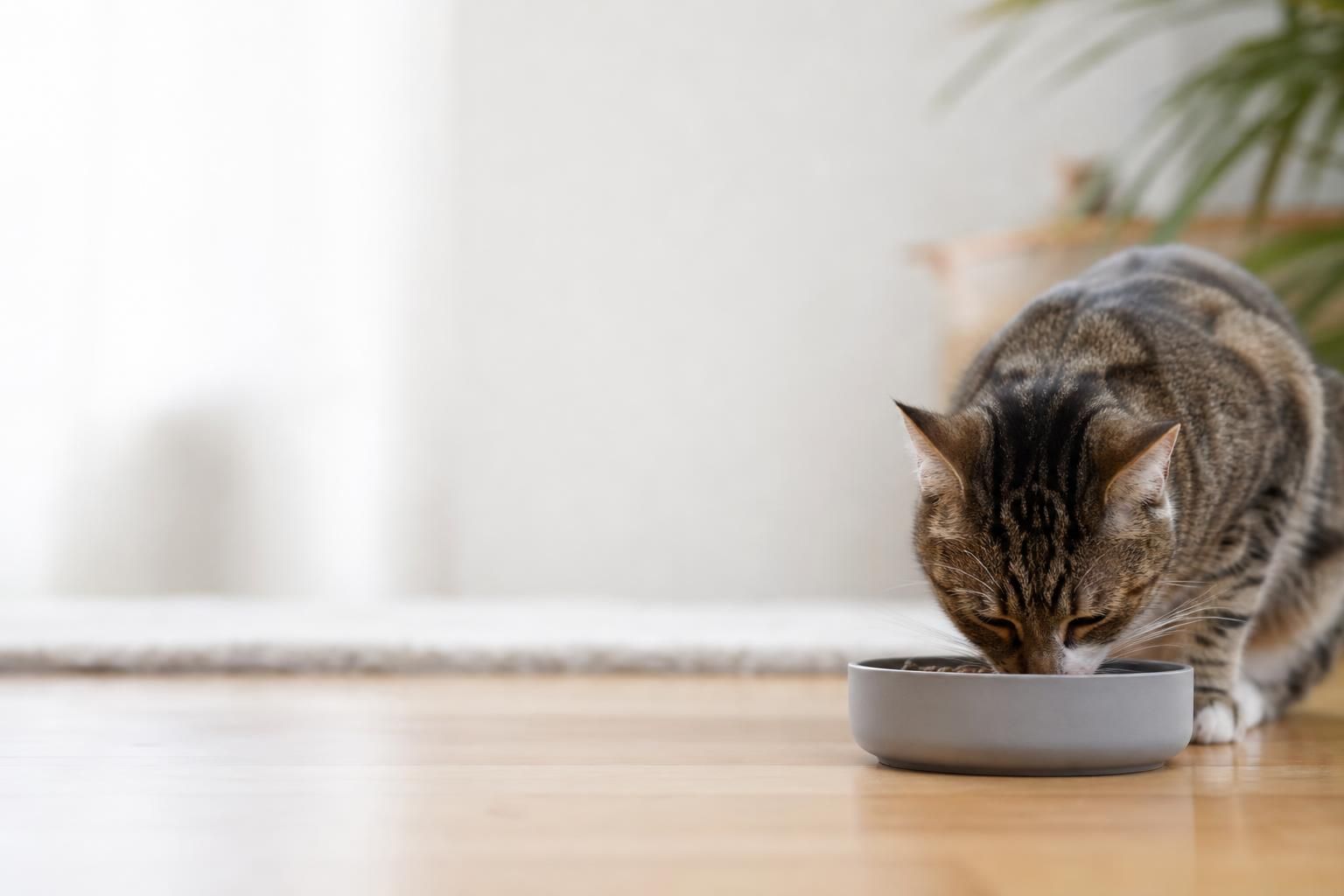
To transition a cat to a new food bowl, place the new bowl next to the old one at the same mealtime for 3-5 days, then gradually move food into the new bowl while keeping the old one empty nearby until your cat eats from the new one without hesitation. Most cats adjust within a week if the new bowl is shallow, wide, and positioned in the same general feeding spot. Sudden swaps, deep bowls, or a change in location are the most common reasons cats refuse to eat from a new dish.
Key takeaways
- Introduce the new bowl alongside the old one for several days instead of swapping cold turkey.
- Choose a wide, shallow bowl (roughly 3 inches or more across the base) to avoid whisker fatigue.
- Keep feeding location, timing, and surface height consistent during the switch to limit stress.
Why cats resist a new bowl in the first place
Cats are creatures of habit around food, and that habit includes the exact object the food sits in. A new bowl changes the smell, the depth, the material, and sometimes the sound it makes against the floor — all signals a cat's brain registers before it even looks at the food. This is amplified in multi-cat households where a bowl also carries scent markers that signal "safe" or "mine."
Many cats also react to bowl depth specifically. Narrow or deep bowls can press against a cat's sensitive facial whiskers with every bite, a discomfort sometimes called whisker fatigue. The Cornell Feline Health Center notes that cats rely heavily on their whiskers to sense their surroundings, which is why repeated contact with bowl walls can make mealtime feel unpleasant enough that a cat starts avoiding the dish entirely.
A step-by-step transition method
- Day 1-3: Set the new bowl directly next to the old, familiar bowl at every meal. Put the usual amount of food in the old bowl and only a small amount in the new one.
- Day 4-5: Split the portion roughly in half between both bowls so your cat has to interact with the new one to get a full meal.
- Day 6-7: Serve the full meal in the new bowl, leaving the old one nearby but empty.
- Day 8 onward: Remove the old bowl once your cat approaches the new one without hesitation for two consecutive meals.
If your cat skips meals entirely for more than 24 hours during this process, go back a step rather than pushing forward — prolonged appetite loss in cats can lead to liver problems, so it's not something to wait out. The ASPCA advises monitoring any cat that stops eating for more than a day and contacting a veterinarian if the refusal continues.
Picking a bowl shape that won't cause a setback
The bowl itself often decides whether a transition goes smoothly or stalls. A few practical guidelines:
- Width over depth: A shallow, wide bowl keeps whiskers free and food visible from every angle.
- Low rim height: Cats tend to prefer bowls where the food sits close to the rim rather than buried at the bottom.
- Non-slip base: A bowl that slides across tile or hardwood adds noise and instability that can spook a cat mid-meal, undoing progress.
- Material consistency: If your cat was eating from a metal bowl, switching to plastic (or vice versa) changes both scent retention and taste, which can slow acceptance.
Stainless steel and ceramic slow feeder bowls are common choices because they resist scratching and don't hold odors the way some plastics do over time. If you're shopping for a replacement, Ziva Paws' feeding collection includes wide, shallow bowl styles and slow feeders designed around these same whisker-friendly proportions.
Keep the rest of the routine the same
When you change the bowl, try not to change anything else at once. Keep the feeding spot, the time of day, and the food itself identical during the transition window. Cats read consistency as safety, and stacking multiple changes — new bowl, new food, new location — at the same time makes it much harder to tell which change is causing hesitation. This same principle applies to other household changes: the gradual, side-by-side introduction method described here mirrors the approach used in how to introduce a new cat bed to an anxious cat, where slow exposure beats a sudden swap.
If your cat is a picky eater to begin with, a bowl change can temporarily mask or worsen existing feeding quirks. It's worth ruling out food-related preferences first — for example, some cats that seem to "reject" a new bowl are actually reacting to the wet food mixing differently in a new shape, which is covered in more detail in why some cats only eat wet food.
Signs the transition is going well — or not
A smooth transition usually looks like your cat approaching the new bowl at normal mealtimes, eating a full portion within a few minutes, and showing no pawing, sniffing-and-walking-away, or meowing at the old spot. Warning signs to watch for include eating less than half the usual portion for more than two days in a row, vomiting shortly after eating (which can indicate the bowl shape is still uncomfortable), or a cat that waits until you leave the room to eat, suggesting stress rather than acceptance.
The American Veterinary Medical Association recommends treating any unexplained drop in a cat's food intake lasting beyond 24-48 hours as a reason for a veterinary check, since cats are prone to hepatic lipidosis when they stop eating for extended periods — a risk that's higher in overweight cats but worth watching for any cat.
At Ziva Paws, bowls and feeders go through a basic household trial with resident cats Ai and Dudu before they're listed, mainly to check that the depth and base width hold up to everyday, fussy-cat scrutiny — the same traits that matter most when you're easing a cat into a bowl swap at home.
Frequently Asked Questions
Q: How long does it take for a cat to get used to a new food bowl?
Most cats adjust within 5 to 10 days when the new bowl is introduced gradually alongside the old one. Cats that are naturally more cautious, or households with multiple cats competing over food, may need two to three weeks.
Q: Why does my cat paw at the new bowl instead of eating from it?
Pawing often means the cat is trying to move food to a spot that feels more comfortable, which can signal the bowl is too deep or narrow for easy access. Switching to a wider, shallower bowl usually resolves this within a few days.
Q: Should I wash the old bowl less to help the transition?
No — keep both bowls clean as usual. Relying on built-up scent to coax a cat into eating can encourage bacterial buildup, and a clean, wide bowl is a more reliable fix than an unwashed one.
Q: Can changing a food bowl really cause a cat to stop eating?
Yes, in sensitive cats a sudden bowl change combined with whisker discomfort or an unfamiliar feeding spot can lead to temporary food refusal. If refusal lasts more than 24 hours, reintroduce the old bowl and slow the transition down.
Q: Is it better to use separate bowls for food and water during this transition?
Yes — many veterinary behaviorists suggest keeping water away from food bowls regardless of transition status, since some cats associate food scent with water and drink less when the two are combined.