Why Does My Dog Refuse to Wear a Coat?
Key takeaway
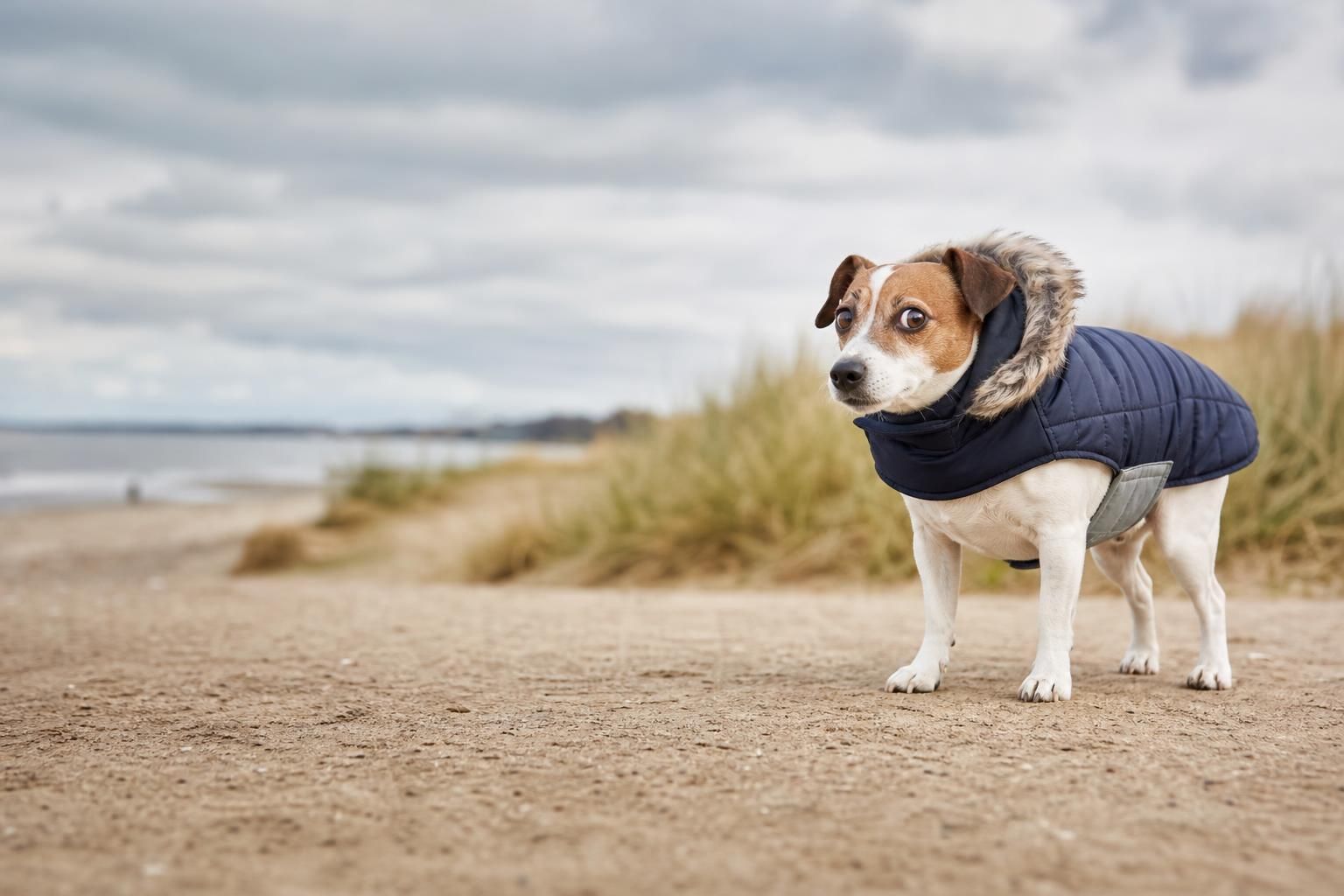
Most dogs refuse to wear a coat because the sensation of fabric on their back, shoulders, and legs feels unfamiliar and restricts their normal movement, triggering a freeze, flop, or frantic-scratch response. Poor fit — a coat that's too tight across the chest or binds at the legs — makes this worse and turns a neutral experience into one the dog actively avoids. The fix is almost always a combination of better sizing and slow, positive introduction rather than forcing the coat on.
Key takeaways
- Coat refusal is usually about sensation and fit, not stubbornness — dogs aren't built to expect fabric touching their torso.
- A coat that's too tight at the chest or neck, or long enough to catch on the legs, will get rejected even after repeated tries.
- Short, reward-based practice sessions (a few minutes a day) work better than one long struggle to "just get it on."
What's Really Happening When a Dog Freezes Up
Dogs experience fabric pressure differently than people do. The first time a coat goes on, many dogs go still, walk stiffly, or drop to the ground — this is a startle response, not defiance. The sensation of something covering the back and chest interferes with their usual sense of where their body is in space, and dogs rely heavily on unrestricted movement to feel secure. This same freeze-and-flop pattern shows up in dogs that shake after putting on a coat, which is often a stress-shake rather than a cold response.
Breed and coat type matter too. Dogs with naturally thick double coats (huskies, malamutes) may resist apparel simply because they don't need it and find it irritating, while short-haired, small, or senior dogs are more likely to tolerate a coat because they feel the benefit immediately.
Fit Problems That Make Dogs Hate Coats
A coat that doesn't fit correctly is one of the most common — and most fixable — reasons for refusal. Generic small/medium/large labels vary wildly between brands, so a "medium" from one company can be snug on one dog and loose on another of the same breed. Problems to check for:
- Tight at the chest or armpits — restricts the front legs and makes walking awkward, so the dog resists putting a paw through.
- Too long in the back — drags near the tail or catches on the hind legs when the dog moves.
- Loose neck opening — slips to one side and spooks the dog with unexpected movement.
- Scratchy seams or Velcro near the belly — causes repeated attempts to bite or scratch the coat off.
Measuring chest girth (the widest part behind the front legs), neck circumference, and back length (base of neck to base of tail) before buying solves most of these issues. Ziva Paws' clothing collection lists every size in inches for exactly this reason — chest, neck, and back length — instead of relying on S/M/L labels that don't translate consistently across brands.
Past Experience and Associations
A dog that had a bad first encounter with a coat — tangled legs, a zipper that pinched, or being dressed quickly while anxious — can generalize that stress to all coats afterward. This is the same learning mechanism behind dogs that refuse to sleep in a crate: one uncomfortable or rushed experience gets filed away as "this thing is bad," and the dog avoids it going forward even when conditions change.
The American Veterinary Society of Animal Behavior notes that fear-based avoidance responses are best addressed through gradual desensitization and positive association rather than repeated exposure to the same stressful situation, which tends to reinforce the fear instead of resolving it.
How to Help a Dog Get Comfortable With a Coat
- Let the coat exist in their space first. Leave it near the food bowl or bed for a day or two so it stops being a novel object.
- Drape, don't dress. Lay the coat over the dog's back for a few seconds while giving treats, then remove it before any struggle starts.
- Fasten gradually. Once draping is easy, clip one strap, treat, then release. Build up to full fastening over several short sessions.
- Add movement last. Only ask the dog to walk in the coat after they're relaxed standing still in it.
- Keep sessions under five minutes. Short, successful repetitions build confidence faster than one long session that ends in frustration.
Cats go through a near-identical process with clothing and harnesses, which is one reason the team tests every apparel item on their own cats, Ai and Dudu, before it's listed — a coat that neither cat will tolerate standing still in usually points to a fit or fabric issue worth fixing before it ever reaches a customer.
When a Coat Is Actually Necessary
Not every dog needs a coat, but some genuinely benefit from one in cold or wet conditions — short-haired breeds, small dogs with less body mass to retain heat, senior dogs, and puppies regulate temperature less efficiently than thick-coated adult breeds. The American Veterinary Medical Association advises limiting outdoor time in freezing temperatures for dogs that show shivering, lifting paws repeatedly, or reluctance to walk — all signs a layer of protection would help. For dogs that tolerate neckwear better than a full coat, a scarf can be a lighter alternative in winter while they build tolerance toward a full coat.
Signs It's Not Just Resistance — It Could Be Pain or Poor Fit
If a dog that previously wore coats without issue suddenly starts refusing, it's worth ruling out physical causes before assuming it's behavioral. Watch for:
- Yelping or snapping when the coat touches a specific spot (could indicate shoulder, back, or skin pain)
- Refusal that started right after a growth spurt or weight change (the coat may simply no longer fit)
- Hair loss or redness where the coat sits (friction or an allergic reaction to the fabric)
If any of these apply, a vet check is a reasonable next step before continuing training.
Frequently Asked Questions
Q: Why does my dog go stiff or fall over when I put on a coat?
This is typically a startle or freeze response to the unfamiliar sensation of fabric restricting movement, not a sign of pain. It usually fades with short, reward-based practice sessions that introduce the coat gradually.
Q: Does coat size really make that much difference?
Yes — a coat that's tight at the chest or drags at the back length will cause real discomfort and awkward movement, which is enough to make most dogs resist wearing it again. Measuring chest girth, neck, and back length before buying avoids most fit-related refusal.
Q: Should I force the coat on if my dog resists?
No. Forcing it on tends to reinforce the negative association and makes future attempts harder. Gradual desensitization with treats and short sessions is more effective long-term.
Q: Do all dogs need to wear coats in winter?
No — thick double-coated breeds often don't need one, while short-haired, small, senior, or very young dogs benefit more from added warmth in cold or wet weather.
Q: Could my dog's sudden coat refusal mean something is wrong physically?
It's possible, especially if the refusal is new, paired with yelping, or there's redness or hair loss where the coat sits. A quick vet check can rule out pain or skin irritation before continuing training.