Why Does My Dog Shake After Putting on a Coat?
Key takeaway
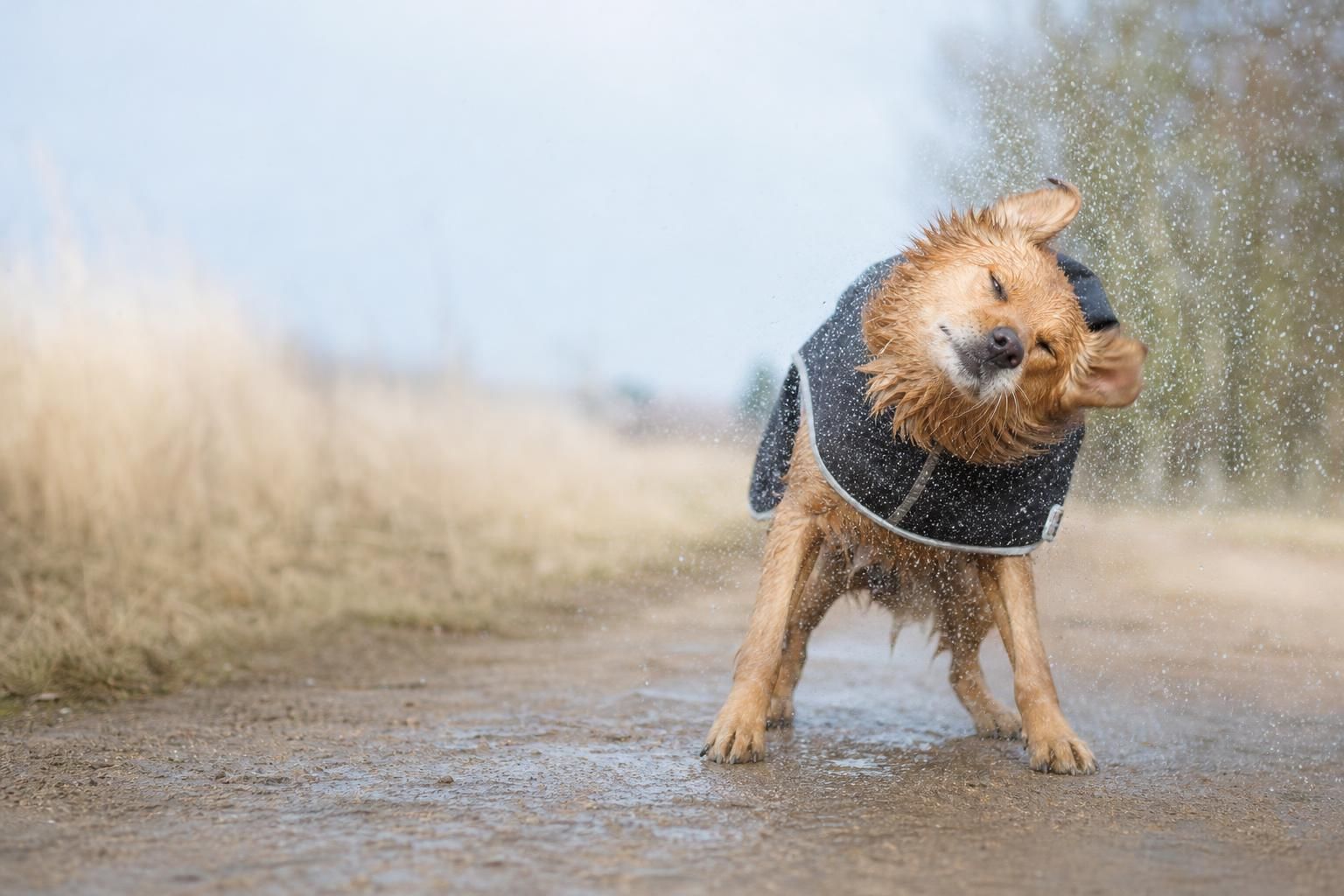
Most dogs shake after putting on a coat because the garment feels unfamiliar against their fur and skin, not because something is wrong with them physically. The shaking is usually a reflexive attempt to resettle their fur and loosen the sensation of fabric touching their body, similar to how dogs shake off water. In some cases, though, the shake signals a poor fit, cold-weather stress, or genuine anxiety that's worth addressing.
Key takeaways
- A quick full-body shake right after dressing is usually a resettling reflex, not pain — it typically stops within a minute or two.
- Repeated shaking, freezing in place, or trying to bite at the coat points to fit problems or fabric sensitivity, not just novelty.
- Measuring chest, neck, and back length in inches before buying solves most ongoing fit-related shaking.
The Resettling Reflex Is Normal
Dogs have a startle-and-shake pattern built into their nervous system. When something touches their fur unexpectedly — rain, a bath towel, or a coat — many dogs do a full-body shake to reset the position of their hair and relieve the odd sensory input. Veterinary behaviorists note this is the same mechanism dogs use after getting wet, where the shake helps redistribute fur and remove the feeling of something foreign against the skin, according to Cornell University's College of Veterinary Medicine. If your dog shakes once or twice and then walks normally, this is almost always what's happening.
This reflex tends to fade with repetition. Dogs who wear a coat regularly through a cold season usually stop shaking after the first few wears, once the sensation becomes familiar.
When the Shake Means the Coat Doesn't Fit
A coat that's too tight across the chest, has a scratchy seam, or pulls at the neck will trigger more than a one-time shake — it produces ongoing discomfort that looks like shuddering, freezing in place, or trying to scratch and bite at the fabric. This is the most common fixable cause of repeated shaking.
Generic size labels like small, medium, or large vary wildly between brands, which is why Ziva Paws uses actual inch measurements — chest girth, neck circumference, and back length — on every clothing listing instead of guessing from a size chart. Measuring your dog with a soft tape before buying removes most of the fit guesswork that leads to shaking, chafing, or a coat sliding sideways.
Signs the coat itself is the problem:
- Shaking continues for more than a couple of minutes after putting it on
- Your dog won't walk forward, or walks stiffly like it's "frozen"
- The coat leaves flattened fur lines or red skin underneath after removal
- Your dog paws at the neck or tries to pull a leg strap off
Cold, Nerves, and Novelty Can Look the Same
Shaking isn't only a fabric issue — it can also show up when a dog is cold, nervous, or simply unsure what's happening. Small and short-haired breeds shiver in genuinely cold air even while wearing a coat if the garment doesn't cover enough of the torso or legs. Separately, some dogs shake from mild stress any time they're handled and dressed, the same way they might shake before a nail trim or vet visit.
The American Veterinary Medical Association points out that shaking, trembling, and whole-body shivering are common physical responses to both cold and anxiety in dogs, and the two can be hard to tell apart without checking the environment first — see the AVMA's pet care resources for general guidance on canine stress signals. If the room is warm and the dog still shakes, nerves are the more likely driver.
How to Tell the Difference in Under a Minute
A simple on-the-spot check helps separate harmless novelty shaking from a real problem:
- Time it. Harmless shakes stop within 60–90 seconds. Ongoing shuddering past that point suggests discomfort or cold.
- Watch the gait. Normal walking after the shake is a good sign. Freezing, crouching, or a hunched back suggests the coat is restricting movement.
- Check the fit by hand. Slide two fingers under the chest strap and neckline — if they don't fit easily, the coat is too tight.
- Feel the fabric seams. Run a finger along the inside seams for rough edges or tags that could be rubbing bare skin.
- Note the room temperature. Shaking in a warm house points to stress or fabric sensitivity rather than cold.
If your dog is naturally more anxious about new sensations, the same slow, calm approach that helps with a dog that won't settle in his crate works here too — short sessions, treats paired with dressing, and no rushing the process.
Introducing a Coat Without the Drama
Dogs generalize faster when the coat is introduced gradually instead of all at once. A practical sequence:
- Let the dog sniff and sit near the coat, unworn, for a day or two
- Drape it loosely over the back for a few seconds, then remove it and reward
- Fasten it fully for one minute indoors before any walk
- Only take the first real outdoor walk in it once indoor practice feels routine
This mirrors how many trainers introduce grooming tools or new textures — the same gradual-exposure logic used for a cat that's hesitant around new bedding or scratching at a new bed applies to dogs adjusting to new clothing.
At Ziva Paws, every clothing item — sweaters, coats, and dresses alike — is tested on the shop's own cats, Ai and Dudu, before it's listed, mainly to check that seams lie flat and closures don't pinch. The same fit principles (true inch-based measurements over vague size letters) apply directly to the clothing collection for dogs, where chest, neck, and back-length numbers are listed for every coat and sweater.
When to Call a Vet Instead
Occasional dressing-related shaking is normal. Contact a veterinarian if the shaking:
- Happens even without a coat on, randomly throughout the day
- Comes with limping, panting, or reluctance to move at all
- Is paired with vomiting, drooling, or visible pain response when touched
- Continues for more than a few minutes regardless of coat removal
These patterns suggest something unrelated to clothing — a joint issue, pain, or a neurological cause — and are worth a professional look rather than a fit adjustment.
Frequently Asked Questions
Q: Is it normal for a dog to shake every single time a coat goes on?
Yes, if the shake lasts under two minutes and your dog walks normally afterward — it's usually a sensory resettling reflex rather than a sign of pain.
Q: Does coat material affect how much a dog shakes?
Yes. Stiff, scratchy, or heavily lined fabrics tend to trigger more shaking and scratching at the garment than soft, flexible materials that move with the dog's body.
Q: How do I know if a coat is too tight?
You should be able to slide two fingers comfortably under the chest strap and neckline; if it's snug beyond that, size up or recheck the dog's chest and neck measurements in inches.
Q: Will my dog eventually stop shaking when wearing a coat?
Most dogs stop shaking after a handful of wears as the fabric sensation becomes familiar, especially if the coat fits well and is introduced gradually indoors first.
Q: Can anxiety alone cause shaking, even with a well-fitted coat?
Yes — some dogs shake from the stress of handling and dressing itself, independent of fit, and often calm down with slower, reward-based introductions over several sessions.