Why Does My Dog Smell Bad After a Bath?
Key takeaway
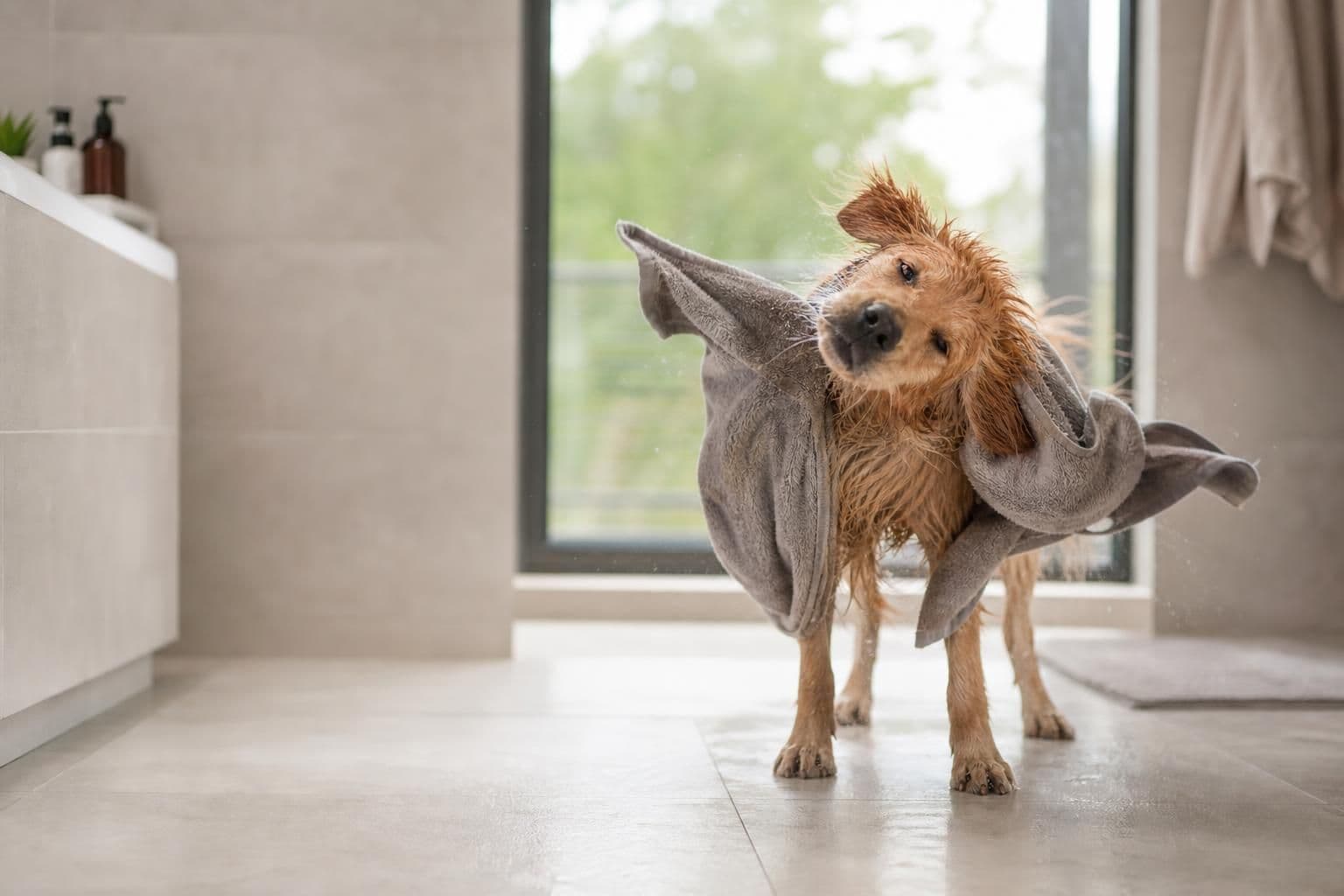
A dog that smells bad right after a bath is usually dealing with one of three things: shampoo residue left in the coat, a damp undercoat that's brewing bacteria and yeast, or an underlying skin, ear, or anal gland issue that water alone can't wash away. The "wet dog" smell itself is a normal, temporary byproduct of oils and moisture on the skin evaporating, but a sour or musty odor that shows up hours or days later usually points to something that needs a closer look.
Key takeaways
- Rinse shampoo for a full two minutes past when the coat feels "squeaky" — leftover residue traps dirt and odor fast.
- A damp undercoat is a breeding ground for yeast and bacteria; towel- and air-dry until the base of the fur is completely dry, not just the top layer.
- Recurring odor within a day or two of bathing, especially with itching or head-shaking, often means skin, ear, or anal gland involvement rather than a grooming miss.
What Causes That "Wet Dog" Smell in the First Place
The classic wet-dog smell comes from bacteria and yeast that live naturally on every dog's skin, along with oils in the coat. When fur gets wet, those microorganisms release compounds that evaporate into the air along with the water — it's a temporary chemical reaction, not a sign anything is wrong. This smell should fade as the coat dries fully. If it doesn't fade, or if it's replaced by something sourer or more "cheesy," that's a different problem.
Common Reasons a Dog Still Smells Bad After Bathing
Several everyday grooming mistakes and health issues can leave odor behind even after a full bath:
- Shampoo not fully rinsed out. Residue attracts dirt and dust, and it can irritate skin, which produces more oil and odor over the following days.
- Wrong shampoo for a dog's skin. Human shampoo or harsh formulas disrupt the skin's natural pH, which the American Kennel Club notes is more alkaline than human skin, making dogs more prone to dryness and bacterial overgrowth when the wrong products are used.
- Coat left damp at the roots. Towel-drying the surface fur while the undercoat stays wet creates a warm, moist environment where yeast thrives — especially in double-coated breeds.
- Ear infections. Water trapped in the ear canal during a bath can trigger a yeasty smell that has nothing to do with the coat itself.
- Anal gland issues. A sharp, fishy odor that appears soon after bathing is often glandular, not related to the bath at all.
- Bedding and towels that weren't clean. A dog that's toweled off with a musty towel or goes straight back into an unwashed bed can pick the smell right back up.
How to Actually Get Rid of Post-Bath Odor
- Brush before you bathe. Removing loose undercoat first lets water and shampoo reach the skin instead of sitting on top of matted fur.
- Use a dog-specific shampoo formulated for a dog's skin pH, and rinse until the water runs completely clear.
- Dry in two stages — a fast-absorbing towel first, then air-drying or a low-heat dryer, paying extra attention to the chest, armpits, and britches where moisture hides longest.
- Check ears after every bath and gently dry the outer ear with a cloth.
- Wash bedding and towels regularly — a bed that smells musty will re-transfer odor to freshly bathed fur within hours.
When It's a Health Issue, Not a Grooming Issue
If the smell returns within a day or two, or is paired with scratching, redness, hair loss, or head-shaking, it's worth treating as a health question rather than a technique question. Yeast dermatitis and bacterial skin infections both produce a distinct musty or "corn chip" smell and typically need a veterinarian's diagnosis and, sometimes, a medicated shampoo — over-the-counter products aren't designed to treat an active infection. The American Veterinary Medical Association recommends a vet visit for any skin odor that persists despite normal bathing, since it can signal allergies, hormonal imbalances, or infection rather than a hygiene gap.
Grooming Habits That Prevent Recurring Odor
Odor control between baths matters as much as the bath itself. Regular brushing removes the loose hair and skin debris that trap oil and bacteria, and it cuts down how often a full bath is even needed — the ASPCA advises bathing most dogs no more than once every four weeks unless a vet recommends otherwise, since over-bathing strips natural oils and can actually make odor worse. A self-cleaning slicker brush used a few times a week between baths pulls out loose undercoat before it builds up, and a quick-absorbing pet towel gets the base coat dry faster than an ordinary bath towel. Ai and Dudu, the two cats who test grooming gear before it's listed on Ziva Paws, have made "does it actually dry fast and de-shed easily" the main bar for anything in the grooming lineup.
Bedding plays a bigger role in lingering odor than most owners expect — a bed that holds onto moisture and skin oils will pass that smell right back onto a freshly bathed coat. Choosing a bed with washable, breathable materials, like the options covered in this guide to a dog bed for hot weather, helps keep both the bed and the dog smelling cleaner between washes.
If a damp dog is also headed into a sweater or coat right after a bath, make sure the coat is fully dry first — trapping moisture under fabric is one of the fastest ways to reintroduce that musty smell, and it's part of why inch-based sizing instead of generic S/M/L matters: a coat that fits properly won't rub or trap damp fur against the skin the way an ill-fitting one can.
Frequently Asked Questions
Q: Is it normal for a dog to smell right after a bath?
Yes — a brief, mild "wet dog" smell is normal while the coat is still drying, caused by natural skin bacteria and oils reacting with water. It should fade completely once the dog is fully dry.
Q: How long after a bath should the odor disappear?
Most dogs stop smelling like "wet dog" within a few hours once the coat, including the undercoat, is completely dry. If odor is still noticeable the next day, it's likely residue, a damp undercoat, or a skin issue rather than normal drying.
Q: Can the wrong shampoo make my dog smell worse?
Yes. Shampoos not formulated for a dog's skin pH can dry out or irritate the skin, prompting extra oil production and bacterial growth, which shows up as a stronger odor over the following days.
Q: Could ear infections cause a bad smell after bathing?
Yes. Water trapped in the ear canal during a bath can encourage yeast or bacterial growth, producing a distinct musty odor that seems tied to the bath but actually comes from the ears.
Q: Should I bathe my dog more often if they keep smelling bad?
Not necessarily — bathing too frequently strips protective natural oils and can worsen odor and dryness. It's usually better to improve drying technique, brushing routine, and bedding hygiene, and see a vet if the smell persists.