Honed vs Polished Granite Countertops: Which Wins?
Key takeaway
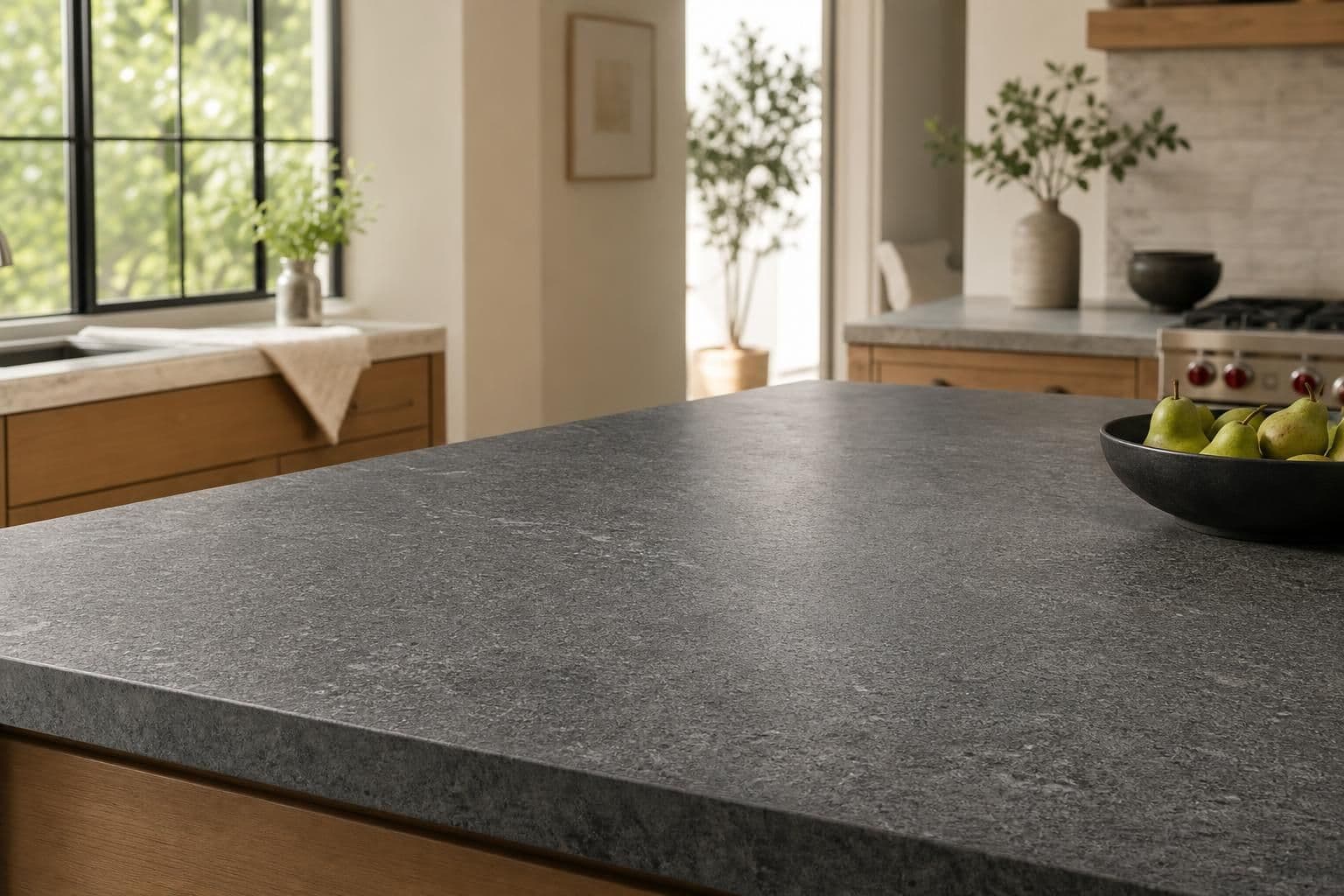
Polished granite has a glossy, mirror-like sheen that reflects light and deepens color, while honed granite has a flat, matte finish created by stopping the grinding process before the final buffing step. Polished surfaces show water spots and resist etching better; honed surfaces hide fingerprints and light scratching but need sealing more often and show oils more readily. Neither finish changes the stone's underlying hardness — the difference is entirely in how the top layer is ground and buffed.
Key takeaways
- Polished granite reflects more light and resists staining slightly better; honed granite hides smudges and daily wear more effectively.
- Honed granite typically needs resealing more often than polished granite because the matte surface is more porous at the finished layer.
- For humid, high-traffic Oahu kitchens, polished finishes are the lower-maintenance default; honed works well on vanities and lower-traffic islands where a softer look matters more.
What Actually Separates the Two Finishes
Granite fabrication involves grinding the slab's surface with progressively finer abrasives. Polished granite goes through the full sequence, ending with a buffing compound that brings out a reflective shine and intensifies the stone's natural veining and color. Honed granite stops a few steps earlier, leaving a smooth but non-reflective, satin-to-matte surface. The mineral composition of the granite — quartz, feldspar, and mica — doesn't change between the two; only the surface texture does.
Because the polishing step closes up microscopic surface pores, polished granite is generally less absorbent than honed granite straight off the fabrication line. That's why sealing schedules differ between the two finishes, which matters more in Hawaii's humidity than in drier mainland climates.
Durability and Daily Wear
Granite itself ranks around 6 to 7 on the Mohs hardness scale, making it one of the harder natural stone countertop materials available, regardless of finish. What changes with finish is how damage shows up, not how easily it occurs:
- Polished granite hides fine scratches better because light scatters off the reflective surface, masking small marks, but any etching from acidic spills (citrus, vinegar) is more visible as a dull spot against the shine.
- Honed granite shows water rings and oil smudges more readily since there's no gloss to distract the eye, but scratches and etching blend into the already-matte texture.
- Both finishes resist heat and scorching from hot pans about equally well, since that property comes from the stone's mineral makeup, not the surface treatment.
Homeowners doing a kitchen remodel around heavy cooking — a common request at VC Flooring & Stone — tend to lean polished for the forgiveness against scratches, while honed shows up more in bathroom vanities and outdoor kitchen surrounds where a softer, non-glare look is the goal.
Maintenance in Hawaii's Climate
Oahu's humidity, salt air, and rainy-season moisture put extra demand on any natural stone surface. Granite is already a good match for the islands because it's non-combustible, won't warp, and stands up to humidity far better than wood-based surfaces, but the finish still affects your maintenance routine:
| Factor | Polished Granite | Honed Granite |
|---|---|---|
| Surface sheen | High gloss, reflective | Matte, low glare |
| Stain visibility | Less visible on dark colors | More visible, shows oil/water |
| Sealing frequency | Roughly annual for most colors | Often every 6–12 months |
| Scratch visibility | Masked by reflection | Blends into matte texture |
| Best rooms | Kitchen islands, counters | Vanities, outdoor bars, low-glare spaces |
Routine care for both finishes is similar: a pH-neutral cleaner, prompt wipe-up of acidic spills, and a quality sealer reapplied before water stops beading on the surface. For step-by-step care, see this guide on how to clean granite countertops the right way, and if hard water spots have already set in, this piece on removing hard water stains from countertops covers safe methods that work on both finishes.
Choosing Between Them for Your Space
The decision usually comes down to light, color, and how the room gets used rather than one finish being objectively "better."
- Light-reflecting kitchens: Polished granite brightens a room with limited natural light, which matters in condo kitchens with small windows.
- Busy family kitchens: Polished hides the inevitable scuffs of daily cooking better than a matte surface.
- Spa-style bathrooms: Honed granite pairs well with softer, understated vanity designs and doesn't compete visually with tile or fixtures.
- Vacation rentals: Polished is often the practical choice since it needs less frequent resealing between guest turnovers and hides minor wear from renters.
- Outdoor kitchens and lanai bars: Honed finishes reduce glare in direct sun and feel less slippery when wet, though any outdoor granite still needs a sealer rated for exterior exposure.
If you're also weighing granite against other stone options, it's worth comparing durability and look side by side — this breakdown of quartzite versus granite for Oahu kitchens walks through how the two natural stones perform against each other beyond just finish.
Cost and Fabrication Notes
Honed and polished finishes on the same granite slab typically cost about the same to fabricate, since both require full edge and surface work — the difference is which stage the grinding stops at, not extra labor overall. In Hawaii, overall granite countertop pricing runs higher than mainland averages because slabs are shipped in and skilled fabrication labor costs more locally. Rather than estimate a number here, a free design consultation is the most reliable way to get a quote based on your actual kitchen or bathroom layout and chosen slab.
Frequently Asked Questions
Q: Does honed granite scratch more easily than polished granite?
No — the hardness of the stone is identical regardless of finish. Honed granite simply hides scratches better because its matte texture doesn't reflect light the way a polished surface does, which is what makes marks more visible on glossy stone.
Q: Can you turn polished granite into honed granite later?
Yes, a fabricator can re-hone a polished slab by grinding down the glossy top layer, though this is typically done on-site with specialized equipment and isn't something to attempt as a DIY project. Going the other direction — honed to polished — is harder and not always possible depending on how much material was already removed.
Q: Which finish shows water spots less on a kitchen island?
Polished granite generally shows fewer lingering water spots because its denser, sealed surface sheds moisture more readily, though both finishes benefit from wiping up standing water and resealing on schedule.
Q: Is honed granite more likely to stain than polished granite?
Honed granite can be slightly more porous at the surface right after fabrication, which is why it's often sealed somewhat more frequently; with a properly maintained seal, both finishes resist staining similarly well.
Q: Does the finish affect how granite pairs with cabinet styles?
Not functionally, but visually polished granite tends to suit bold, high-contrast cabinet colors since it amplifies veining, while honed granite complements simpler cabinet lines like shaker-style cabinetry paired with quartz principles, where a quieter countertop lets the cabinet details stand out.