How to Get Dog Hair Off the Couch: Fast, Lasting Methods
Key takeaway
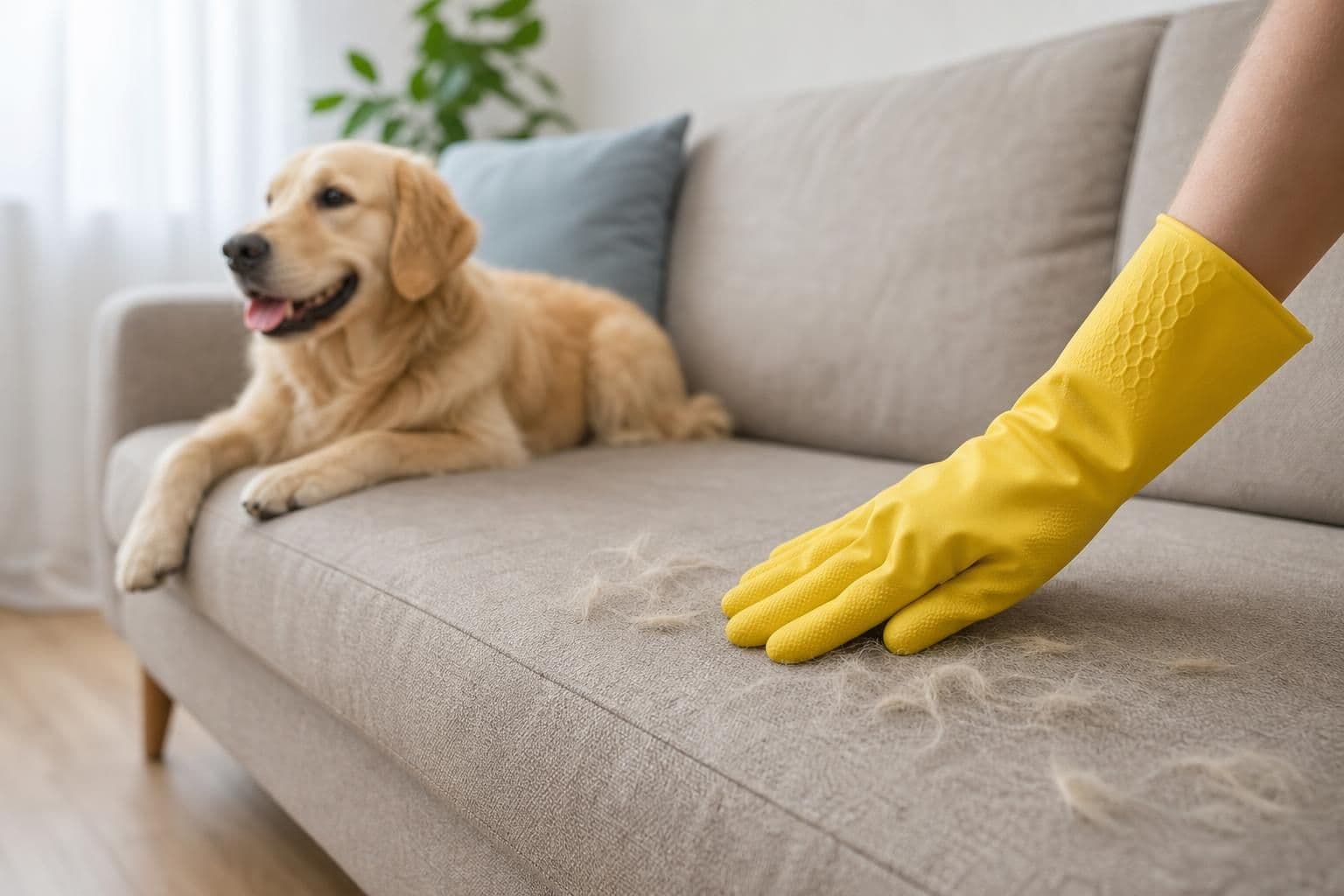
The fastest way to get dog hair off a couch is to use a slightly damp rubber glove or rubber squeegee, dragging it across the fabric in one direction so loose hair bunches into clumps you can lift off by hand or vacuum. Static and fine fabric weaves trap hair, so dry tools like brushes often just push it around instead of releasing it. Pairing this with a vacuum crevice or upholstery attachment finishes the job in a few minutes on most couches.
Key takeaways
- Rubber gloves, squeegees, or damp rubber balloons pull embedded hair out of upholstery better than most lint rollers.
- Working in one direction (not back-and-forth) keeps hair clumping together instead of scattering.
- Reducing shedding at the source — through brushing and a dedicated dog bed — cuts couch cleanup time dramatically.
Why Dog Hair Clings to Couch Fabric
Dog hair grips upholstery because of static electricity and mechanical hooking. Fur strands have microscopic scales that catch on woven fibers, and friction from a dog settling in and shifting position builds a static charge that pulls hair even deeper into the weave. This is why hair on a couch feels harder to remove than hair on a hard floor — it's not just sitting on top, it's physically anchored between fibers. Fabrics with a tight weave, like microfiber or velvet, tend to trap more hair than smooth leather or vinyl.
Tools That Actually Remove Embedded Hair
Not every "pet hair tool" performs the same on upholstery. Here's what tends to work, in rough order of effectiveness for couches specifically:
- Rubber gloves or rubber pet-hair brushes – dampen slightly, then swipe in one direction; hair balls up and lifts off easily.
- Squeegees – a window squeegee dragged across cushions works almost as well as a rubber glove and covers more surface area per pass.
- Vacuum with an upholstery or pet-hair attachment – best for finishing after loosening hair with a glove or squeegee, since vacuums alone often miss deeply embedded strands.
- Lint rollers – convenient for spot touch-ups but slow for full cushions since the adhesive fills up fast.
- Dryer sheets – rubbing a used dryer sheet over fabric reduces static, which can make hair easier to sweep away afterward.
Combining two tools — a rubber glove pass followed by a vacuum — usually clears a couch faster than relying on any single tool alone.
Step-by-Step: Clearing a Couch in Under 10 Minutes
- Remove loose cushions and shake or tap them outside if possible.
- Put on a slightly damp rubber glove and drag your hand across the fabric in long, single-direction strokes.
- Gather the clumped hair as it forms and toss it before it re-scatters.
- Vacuum the seams, crevices, and piping with an upholstery attachment to catch what the glove missed.
- Wipe down with a lint roller for any remaining fine hairs, especially on light-colored fabric where stray hairs show more.
This sequence works on most fabric couches; leather and vinyl typically only need a damp cloth wipe since hair sits on the surface rather than embedding.
Preventing the Buildup Before It Starts
Cleaning the couch repeatedly treats the symptom, not the cause. Regular brushing removes loose undercoat hair before it ends up airborne and on furniture — the American Kennel Club notes that most dogs shed year-round with heavier seasonal sheds in spring and fall, so brushing frequency often needs to increase during those stretches. A grooming routine with the right brush type for your dog's coat pulls out the hair that would otherwise migrate to the couch.
At Ziva Paws, our cats Ai and Dudu spend a lot of time testing grooming tools, and the difference between a stiff-bristle brush and a proper de-shedding slicker brush is obvious within a single session — far less loose fur ends up floating onto nearby furniture. If your household is dealing with constant shedding, it's worth browsing the grooming collection for tools designed to catch loose hair before it spreads.
Give the Couch a Competing Spot to Lounge
Dogs often camp out on the couch simply because it's the softest, warmest spot in the room. Offering a comfortable, easily washable dog bed nearby gives them a place to settle that isn't your upholstery. This is especially useful for dogs that pace or resettle frequently, since anxious dogs tend to shed more from stress-related licking and scratching — a pattern covered in more detail in our guide on choosing a cozy bed for anxious dogs. Placing the bed within sight of the family's usual seating area (rather than in a separate room) makes dogs more likely to actually use it instead of the couch.
Fabric and Cover Choices That Make Cleanup Easier
If you're furnishing or re-covering a couch in a pet household, some materials shed hair back off much easier than others:
- Leather and faux leather – hair sits on top and wipes away with a damp cloth.
- Tightly woven canvas or denim-style fabric – less snagging than looped or nubby textures.
- Removable, washable slipcovers – let you machine-wash hair out entirely instead of manually removing it.
- Throws or couch covers – a washable throw over a favorite dog spot can be tossed in the laundry instead of treating the whole couch.
Static-reducing fabric sprays, sold at most pet and home stores, can also cut down how aggressively hair clings between cleanings, though results vary by fabric type.
When Grooming Habits Matter More Than Tools
No couch tool fully replaces a coat that's regularly brushed out. The U.S. Environmental Protection Agency notes that pet dander and loose hair are common contributors to indoor allergens, so frequent brushing does double duty: less hair on furniture and lower dander levels in the room. For dogs with double coats or heavy seasonal shedding, brushing two to three times a week during peak shedding season keeps far more hair in the brush than on the cushions. Coat type also affects clothing fit for dogs who wear sweaters or coats in cooler months — if you're sizing outerwear for a shedding breed, our guide on measuring a dog for accurate clothing sizes explains why chest and neck measurements matter more than generic size labels, since a properly fitted coat also means less loose hair getting rubbed off directly onto furniture.
Frequently Asked Questions
Q: What removes dog hair from a couch the fastest?
A damp rubber glove or squeegee dragged across the fabric in one direction is generally the fastest method, since it lifts embedded hair into clumps rather than just brushing it around. Following up with a vacuum's upholstery attachment clears any remaining fine hairs.
Q: Does vacuuming alone get dog hair off a couch?
Vacuuming alone often misses hair that's mechanically hooked into the fabric weave, especially on textured or looped upholstery. Loosening the hair first with a rubber glove or squeegee, then vacuuming, produces noticeably better results.
Q: How often should I brush my dog to reduce couch shedding?
Most dogs benefit from brushing two to three times a week, increasing to near-daily during seasonal heavy shedding periods in spring and fall. Coat type and breed affect how much this varies, but consistent brushing is the single biggest factor in reducing hair on furniture.
Q: Are certain couch fabrics better at resisting dog hair?
Yes — leather, faux leather, and tightly woven fabrics resist hair far better than looped or textured weaves like chenille or velvet, which trap hair between fibers. Washable slipcovers are also easier to fully clean than fixed upholstery.
Q: Can a dog bed actually reduce how much hair ends up on the couch?
Giving a dog an appealing, comfortable bed nearby often redirects where they choose to lounge, especially if it's placed in the same room as the family's usual seating. It won't eliminate shedding, but it concentrates loose hair somewhere washable instead of on the couch itself.