Body Camera for Hiking: What to Look For
Key takeaway
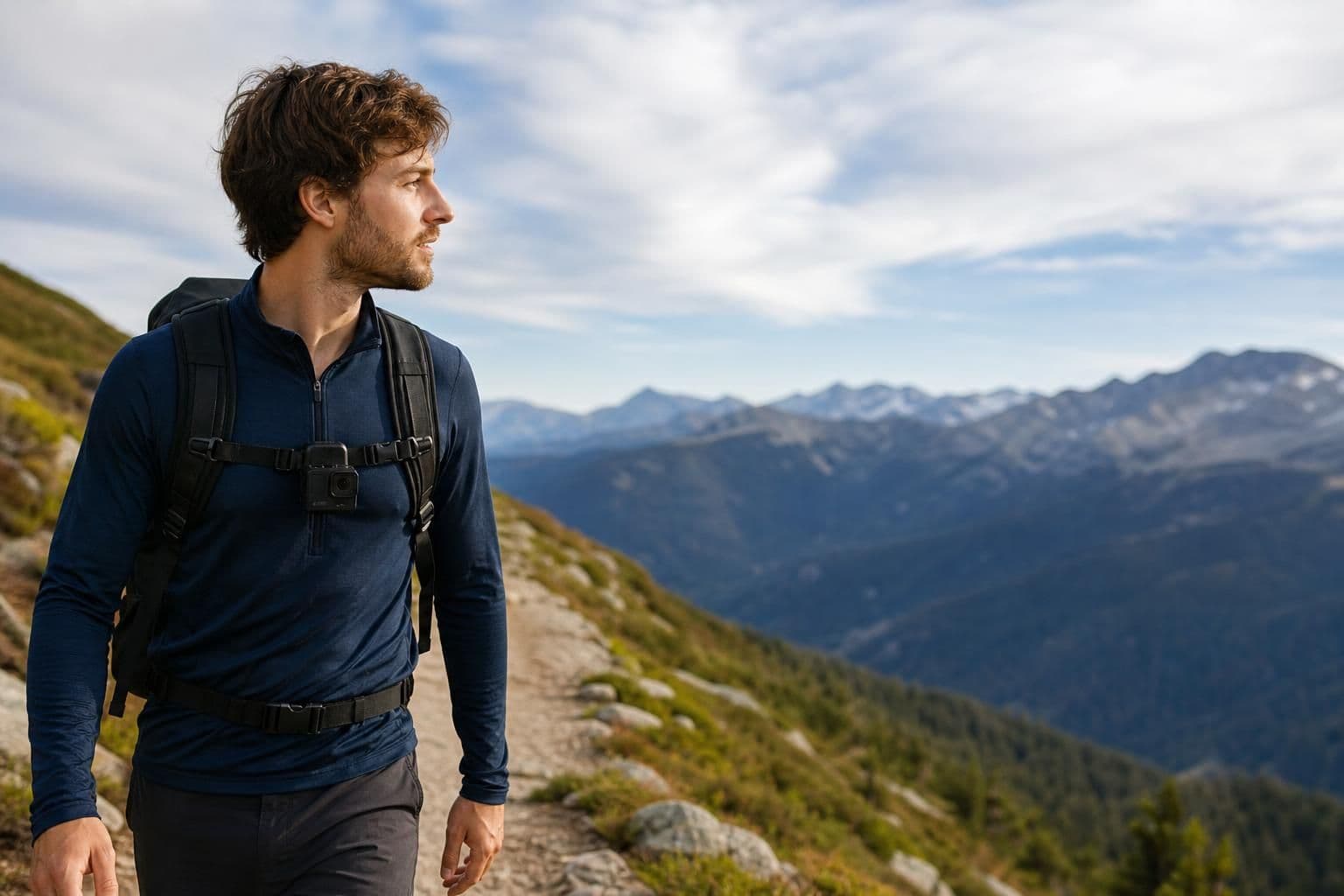
A body camera for hiking works best when it's hands-free, easy to reposition, and simple to start recording without fiddling with settings mid-trail. For most hikers this means prioritizing a rotatable, wearable design over bulky rigs, since you'll want to capture wildlife, viewpoints, or trail conditions quickly while keeping your hands on poles or gear. Legal rules around recording others on shared trails vary by state and country, so check local law before filming people you don't know.
Key takeaways
- Choose a wearable, hands-free camera so you're not holding a device while navigating uneven terrain.
- A rotatable body matters more on trails than on flat ground, since you'll point it at a view, a creek crossing, or your own feet without unclipping it.
- Recording other hikers or private property raises legal questions that vary by location — know the basics before you hit record.
Why hikers want a body camera instead of a phone
Pulling a phone out on a scramble or a steep descent is awkward and sometimes risky — you need a free hand for balance, poles, or a dog leash. A chest- or strap-mounted camera solves that by staying in place and recording continuously or on command, leaving both hands free. This is the same logic that makes body cameras popular with dog walkers and delivery workers who need their hands available while still documenting their route.
For hiking specifically, the appeal is less about evidence and more about convenience: capturing a surprise deer sighting, documenting trail damage to report to a park office, or just recording a summit view without stopping to compose a phone shot.
What actually matters for trail use
Not every spec that matters for security or delivery work matters the same way on a trail. Here's what to weigh:
| Feature to consider | Why it matters for hiking | What the 4K Rotatable Body Camera offers |
|---|---|---|
| Recording resolution | Sharper footage holds up better when you crop or zoom into distant wildlife or scenery later | 4K recording |
| Camera positioning | A fixed lens can't follow a trail that curves or climbs; a rotatable one adjusts without repositioning the whole unit | Rotatable body for flexible angles |
| Wearability | Hands-free wear matters more on uneven ground than almost anywhere else | Wearable, hands-free design |
| Setup complexity | You don't want to be scrolling menus at a trailhead | Simple, easy operation |
| Getting one before a trip | Planning a hike in a specific window means shipping time matters | Free express shipping with 1–2 business day processing and 7–12 business day estimated arrival |
The 4K Rotatable Body Camera is built around these first four points. For specs beyond what's listed here — battery runtime, storage capacity, or water resistance — check the product page directly rather than assuming, since those details aren't published yet and shouldn't be guessed at.
Rotatable vs fixed: why angle flexibility matters outdoors
On a flat sidewalk or in a stockroom, a fixed-angle camera is fine. On a trail, the ground tilts, you duck under branches, and the thing worth filming might be above you (a hawk) or below you (a river crossing). A rotatable lens lets you adjust the shot without unclipping the whole camera and repositioning it on your pack or strap. If you're trying to decide whether a rotating design is worth it for your specific use, this breakdown of what a rotating body camera design actually does covers the mechanics in more depth.
Body camera or action camera: which fits a hike better?
This is a common fork for outdoor buyers. Action cameras are typically built for sports mounting — helmets, handlebars, chest rigs designed for motion and impact. Body cameras are generally built for simpler, continuous hands-free wear rather than extreme sports footage. If your hike involves scrambling, biking sections, or water crossings where an impact-rated mount matters, it's worth reading how a body camera compares to an action camera before deciding, since the two product categories solve slightly different problems.
Wearing it comfortably for hours on a trail
A camera that's uncomfortable after twenty minutes isn't going to get used for a six-hour hike. Where and how you clip it changes both comfort and what you actually capture. The guide on body camera placement and setup walks through common wear positions and angle adjustments that apply just as well to a trail as to a work setting.
Is it legal to record while hiking?
Recording scenery, wildlife, or yourself on a public trail is generally not a legal issue in most of the U.S., but recording identifiable people without consent can trigger different rules depending on the state, especially around audio and expectation-of-privacy laws on private land or in restrooms and changing areas at trailheads. Some states require two-party consent for audio recording, while others only require one party's consent — the specifics differ by jurisdiction. The Reporters Committee for Freedom of the Press maintains state-by-state recording law summaries that are a useful starting point, and Justia publishes plain-language overviews of state statutes. This is general information, not legal advice, and a body camera should never be used to record people covertly. If you're hiking on federal or state park land, check posted rules too — the National Park Service notes that filming policies can vary by park, especially for commercial use.
A quick pre-trip checklist
Before heading out with a new camera for the first time, it helps to run through a short list rather than figuring it out on the trail:
- Charge the camera fully the night before — don't assume it's charged out of the box.
- Do a test clip at home to check your mounting angle before you're twenty minutes into a hike.
- Know your state's recording consent rules if you expect to film other people.
- Pack it somewhere accessible, not buried at the bottom of your bag, since the whole point is hands-free, quick use.
- If you're buying with a specific trip date in mind, order with enough lead time — processing and transit together can take close to two weeks.
If you're still comparing models generally rather than committing to one, the 4K body camera buying guide covers the broader checklist of what to check first, independent of any single product.
Frequently Asked Questions
Q: Is a body camera legal to wear while hiking?
Wearing and recording yourself or scenery on a public trail is generally fine in most places, but recording other identifiable people may require their consent depending on your state or country. This isn't legal advice — check resources like the Reporters Committee for Freedom of the Press or your local statutes if you plan to film others.
Q: What's the difference between a body camera and an action camera for hiking?
Action cameras are typically designed for sports-style mounting and motion footage, while body cameras are generally built for simple, continuous hands-free wear. Which one suits you depends on whether your hike involves rugged activity like scrambling or biking versus steady walking.
Q: Does a body camera need special mounting for hiking?
The 4K Rotatable Body Camera is designed to be worn hands-free with a rotatable body for adjusting the angle, which suits steady trail walking. For mount type specifics, check the product page directly rather than assuming compatibility with a particular pack or strap.
Q: How long does it take to get a body camera before a planned hiking trip?
Orders typically have 1–2 business days of processing plus an estimated 7–12 business days for delivery under free express shipping. Plan to order at least two weeks ahead of a specific trip date to be safe.
Q: Can I use a body camera to film wildlife on a trail?
Yes, recording scenery and wildlife on public trails is generally not a legal issue, though some parks have their own filming policies, especially for commercial use. Check posted rules or the National Park Service's guidance for the specific park you're visiting.