Cabinet Refacing vs. Replacement: What Oahu Homes Need
Key takeaway
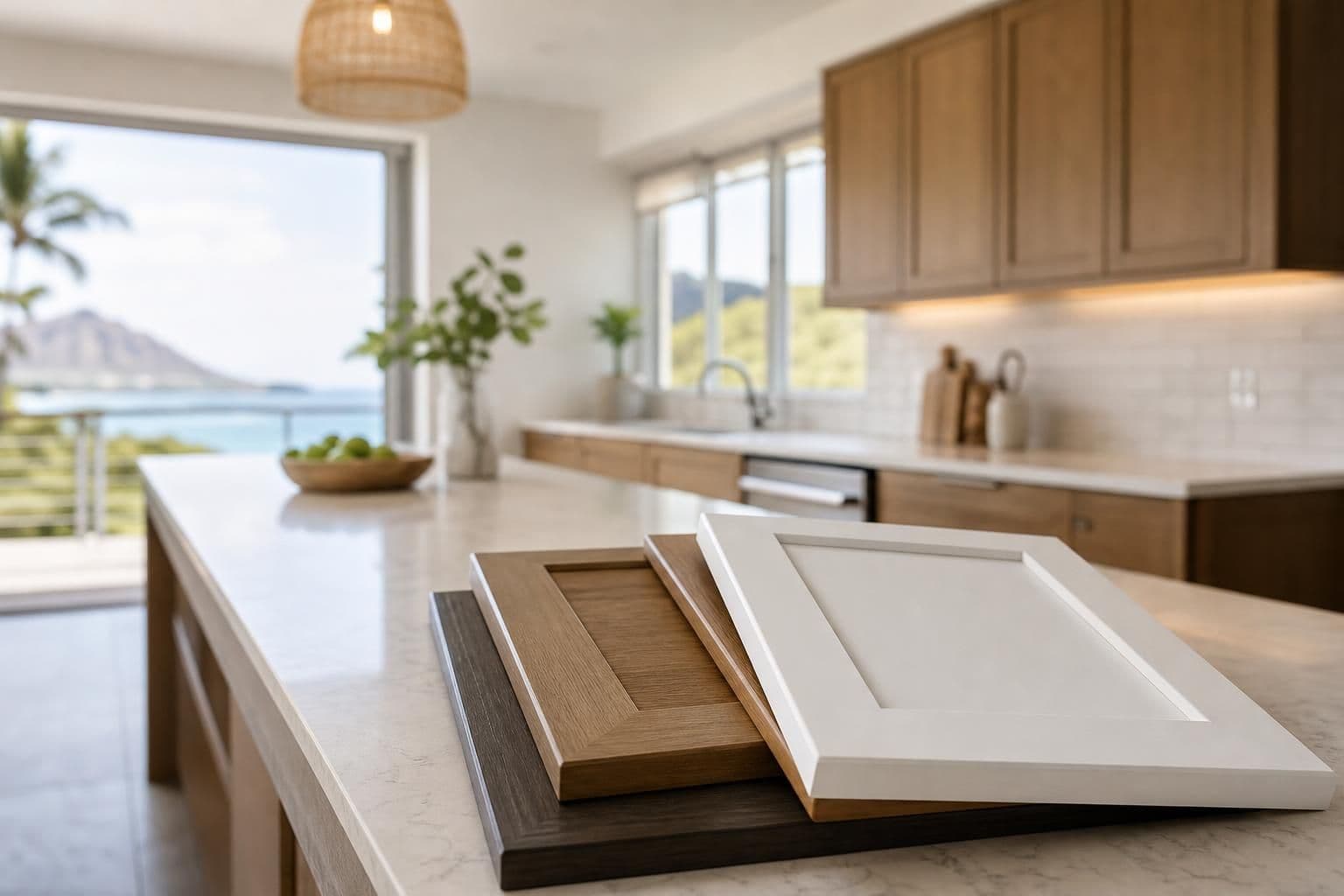
Cabinet refacing replaces only the doors, drawer fronts, and visible surfaces while keeping the existing cabinet boxes, making sense when the boxes are structurally sound and you mainly want a style update. Full replacement removes everything down to the wall studs and is the better choice when boxes show water damage, warping, termite activity, or you're changing the kitchen's layout. In Hawaii specifically, humidity and past moisture exposure often make that structural check the deciding factor more than style preference alone.
Key takeaways
- Refacing only works if the cabinet boxes are still square, solid, and free of water or termite damage — have them inspected before committing either way.
- Choose replacement when you're changing the kitchen layout, upgrading storage, or the boxes are particleboard that's swelled from humidity.
- In Oahu's climate, moisture-resistant box materials and finishes matter more than they do on the mainland, regardless of which path you pick.
What's Actually Different Between the Two
Refacing is a cosmetic process: new door and drawer fronts, new hinges and hardware, and a matching veneer applied to any exposed box surfaces, like end panels. The cabinet carcass — the box that's already screwed into your wall and holds the shelves — stays exactly where it is. Replacement means removing those boxes entirely and installing new cabinetry, which opens up the option to resize cabinets, add deeper drawers, change the footprint, or relocate appliances.
The practical dividing line is the condition of what's underneath, not personal taste. A reface on a failing box just hides a problem temporarily; it doesn't fix it.
When Refacing Makes Sense
Refacing tends to be the right call when:
- The boxes are plywood or solid wood and still structurally tight, with no soft spots, delamination, or sagging shelves.
- You like your current kitchen layout and don't need different storage configurations.
- The main complaint is dated door style, color, or hardware — not function.
- You want to minimize disruption; refacing generally doesn't require tearing out countertops or relocating plumbing and electrical.
Refacing is also a common move for condo owners who want to refresh a unit between rentals without a full gut renovation, since it leaves plumbing, electrical, and countertop connections undisturbed.
When Replacement Is the Better Call
Replacement becomes necessary once the box itself is compromised. Particleboard boxes that have absorbed humidity over years will swell, delaminate at the seams, or lose their ability to hold screws for hinges — no amount of new veneer fixes that. The same is true if there's evidence of termite activity in the box material, since Hawaii's climate supports drywood and subterranean termites year-round, a point the U.S. Environmental Protection Agency and university extension programs across the Pacific have documented in their pest and construction guidance for tropical regions.
Replacement also makes sense anytime you want to change the kitchen's actual function — adding a pantry cabinet, switching to deeper drawers instead of lower cabinet doors, or reconfiguring around a new island. If you're rethinking storage entirely, it's worth browsing kitchen cabinet ideas built for island homes before locking in a layout, since storage needs for Oahu kitchens often differ from mainland floor plans.
A Side-by-Side Comparison
| Factor | Cabinet Refacing | Full Replacement |
|---|---|---|
| Box condition required | Solid, square, no water/termite damage | Any condition — boxes are removed |
| Layout changes | Not possible | Fully flexible |
| Disruption to kitchen | Lower — countertops often stay in place | Higher — may require temporary kitchen setup |
| Typical timeline | Shorter, since boxes aren't rebuilt | Longer, due to full demo and install |
| Best fit | Sound boxes, style refresh only | Damaged boxes, layout change, or storage upgrade |
Why Hawaii's Climate Changes the Calculation
Cabinets on Oahu live in a tougher environment than cabinets in most mainland homes. Consistent humidity, trade-wind-driven salt air near the coast, and heavier rainy-season moisture all accelerate wear on particleboard, MDF edges, and lower-grade veneers. The National Kitchen & Bath Association notes that material selection and moisture exposure are among the top factors in cabinet longevity, which matters more here than in drier climates where the same box might last decades without issue.
That's why an inspection before refacing isn't optional — a box that looks fine on the surface can already have swollen edges or soft spots where water has gotten behind a toe kick or under a sink. If you've noticed doors sticking or not closing flush, it's worth reading about what causes cabinet doors to swell in Hawaii's humidity before deciding which route to take, since swelling is often an early sign the box itself is already failing. For buyers trying to avoid repeating the problem, choosing cabinet brands built for humid climates is a useful filter whether you reface or replace.
What the Process Looks Like
Refacing typically runs through these stages:
- Inspection of existing boxes for structural soundness and moisture damage.
- Measuring and ordering new door and drawer fronts, plus matching veneer for exposed panels.
- Removing old doors, hinges, and hardware.
- Applying veneer to box faces and installing new fronts and hardware.
Replacement follows a longer path: full demo of existing cabinetry, any needed electrical or plumbing adjustments, box installation and leveling, then doors, hardware, and trim. A company like VC Flooring & Stone can walk through both scopes during a free design consultation, since the right answer usually comes down to what's found once the old doors come off and the boxes are visible.
If storage is part of your motivation, it's also worth thinking beyond the main kitchen run — a dedicated walk-in pantry can free up cabinet space elsewhere in the kitchen, which sometimes changes whether a reface still meets your storage goals.
Frequently Asked Questions
Q: Can you reface cabinets that have water damage?
Not successfully long-term. Refacing only replaces visible surfaces, so any swelling, delamination, or soft wood in the box will continue to worsen underneath the new fronts, eventually causing them to loosen or warp again.
Q: How do I know if my cabinet boxes are solid enough to reface?
Check for sagging shelves, soft or spongy particleboard near the sink and dishwasher, and doors or drawers that no longer sit flush even after hinge adjustment. A contractor can confirm this with a quick inspection before you commit to either option.
Q: Does refacing cost less than full replacement?
Refacing generally involves less labor and material than a full teardown and rebuild, since the boxes stay in place. Hawaii project costs for either option run above mainland averages due to shipped-in materials and local labor rates, so it's best to get a specific quote rather than rely on general figures.
Q: Is refacing a good option for a rental unit between tenants?
Yes, refacing is popular for condo and vacation-rental turnovers because it refreshes the kitchen's look without disturbing countertops, plumbing, or electrical, which keeps the unit out of service for less time.
Q: What cabinet box material holds up best in Hawaii's humidity?
Solid wood and marine-grade or moisture-resistant plywood boxes generally outperform standard particleboard in humid, coastal conditions, since particleboard absorbs moisture more readily and swells at the seams over time.