Natural Stone Shower Walls in Oahu: What to Know
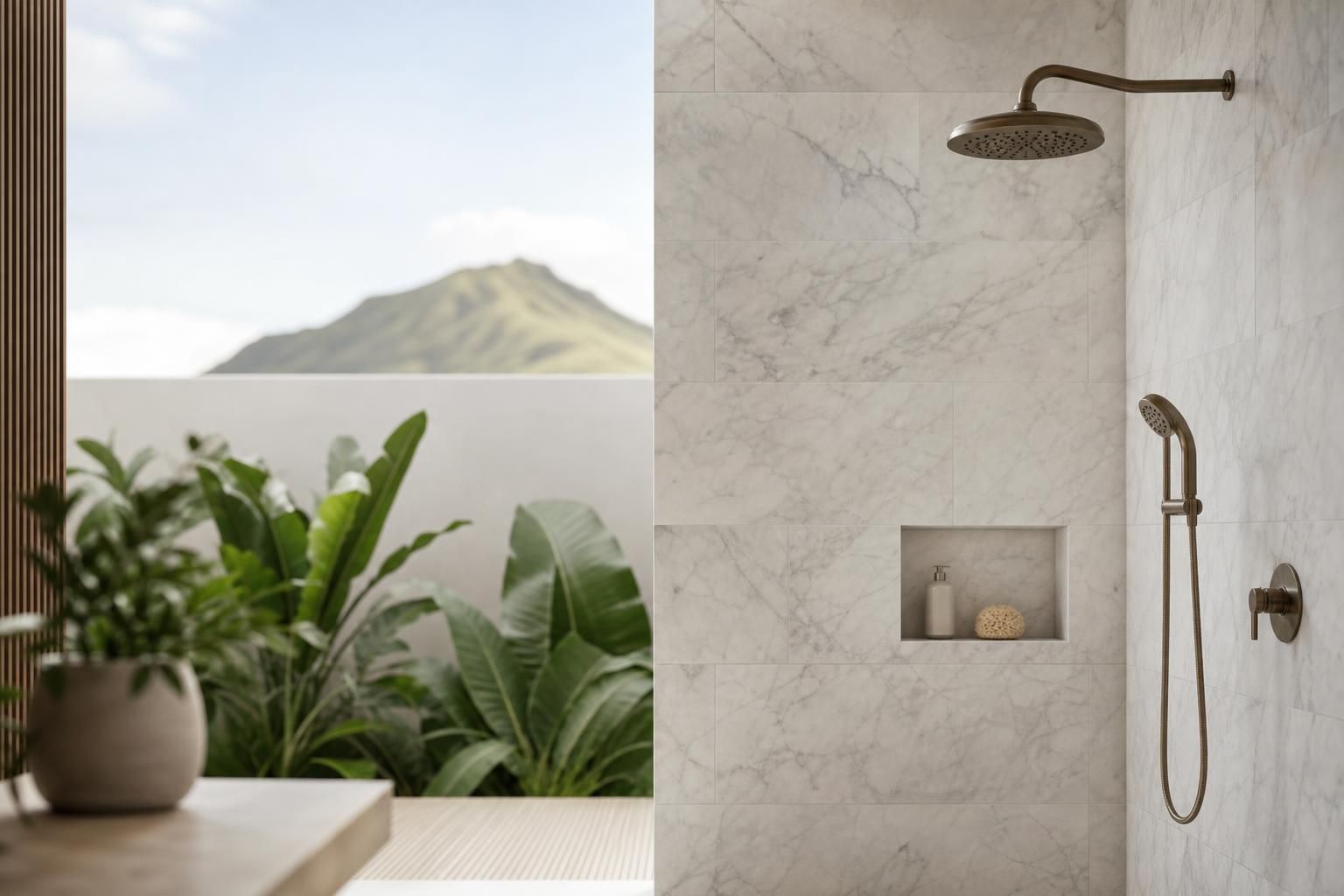
Key takeaway
Natural stone shower walls work well in Oahu homes when the stone is dense, properly sealed, and paired with good bathroom ventilation to manage the island's humidity. Granite, quartzite, and sealed marble hold up best; porous stones like untreated travertine need more upkeep in a tropical climate. The right choice comes down to density, sealing schedule, and whether your bathroom fan can actually clear steam after every shower.
Key takeaways
- Choose dense stones (granite, quartzite) over porous ones (travertine, some limestones) for lower maintenance in Oahu's humidity.
- Reseal natural stone shower walls roughly every 12-18 months in high-humidity bathrooms, more often if water beads less than it used to.
- Pair stone with a working exhaust fan rated for your bathroom's size — moisture control matters as much as the stone itself.
Why Climate Changes the Calculus for Stone Showers
Honolulu's year-round humidity and frequent rainy-season moisture mean a shower wall material spends more time wet than it would in a drier mainland climate. Stone itself doesn't mold, but the organic residue on an unsealed or poorly sealed surface — soap film, skin oils, hard water minerals — can feed mold and mildew if the surface stays damp too long. The EPA notes that mold needs moisture and a food source to grow, and bathroom surfaces that don't fully dry between uses are a common culprit. That's the real reason sealing schedule matters more here than it does in Phoenix or Denver.
Best Natural Stone Options for Oahu Showers
Not all natural stone performs the same in a wet, salty, humid environment. Here's how the common choices stack up:
- Granite: Very low porosity, scratch-resistant, and generally the easiest stone to maintain in a shower. A good first choice if you want a natural look with fewer sealing headaches.
- Quartzite: Harder than granite in most cases, with a similar low-maintenance profile. Pricier and less universally available, but excellent for showers.
- Marble: Beautiful and classic, but softer and more porous than granite. It needs more frequent sealing and is vulnerable to etching from acidic cleaners or lemon-scented soaps.
- Travertine: Porous and pitted by nature, often filled at the factory. In a humid shower, it needs diligent sealing and isn't the best pick for owners who want a low-fuss bathroom.
- Slate: Naturally water-resistant with a textured, matte look, though some slates can flake or delaminate over time if quality is inconsistent.
If you're weighing stone against an engineered surface for walls or a vanity top, it helps to understand how natural stone compares to manufactured options elsewhere in the bathroom — see this breakdown of laminate vs quartz countertops for a sense of how porosity and maintenance trade-offs play out across materials.
Sealing, Grout, and Day-to-Day Upkeep
Sealing is the single biggest maintenance variable for natural stone in a shower. A penetrating sealer soaks into the stone's pores and blocks water and oil from getting absorbed, rather than sitting on top like a topical coating. In Oahu's climate, plan to test your seal every 6-12 months by splashing water on the stone — if it beads up, you're fine; if it darkens and soaks in, it's time to reseal.
Grout lines are usually the weak point before the stone itself fails. Epoxy grout resists staining and moisture better than standard cementitious grout and is worth the upgrade in a shower, even if it costs more upfront than installing elsewhere in the home. A squeegee used after every shower, plus a bathroom fan that actually moves air to the outside (not just into the attic), does more for long-term stone performance than any single product.
Natural Stone vs. Engineered Alternatives
Homeowners often ask whether a quartz slab or large-format porcelain panel makes more sense than natural stone for shower walls. Engineered quartz is nonporous and needs no sealing, which appeals to vacation-rental owners who want a low-maintenance guest bathroom. Natural stone, on the other hand, offers variation and depth that manufactured surfaces can't fully replicate — no two slabs are identical, which is part of the appeal for owners building a one-of-a-kind master bath. The trade-off is maintenance: natural stone asks for periodic sealing, engineered stone generally doesn't.
For owners designing a shared or guest bathroom around a stone shower, it's worth thinking about how the wall material pairs with the rest of the room, including vanity choices — these double vanity bathroom ideas show how stone accents and cabinetry can work together in an island layout. In smaller baths, a wall-hung design can also free up floor space; see these notes on a floating bathroom vanity for how that pairs with a stone-clad shower.
What Professional Installation Involves
Natural stone shower walls aren't a straightforward tile job. Large slabs or thick tile need a properly waterproofed substrate — typically a cement board or foam backer system with a liquid or sheet membrane behind it — because stone itself isn't a waterproofing layer. Slabs also need full mortar coverage (no voids) since hollow spots behind heavy stone can crack the material or let water migrate behind it. Because natural stone is a quarried, inconsistent material, an installer typically dry-lays pieces first to balance veining and color across the wall before any mortar goes down, which is harder to redo once set. The Natural Stone Institute publishes installation and care guidance that most professional fabricators follow for slab handling, sealing products, and substrate prep.
Cutting and polishing natural stone also generates fine dust that requires wet-cutting methods and proper ventilation; the CDC/NIOSH has published guidance on silica dust exposure for stone fabrication work, which is one reason this job is generally left to a trained installer rather than a DIY weekend project.
Hawaii's shipping and labor costs mean natural stone shower walls typically run higher than mainland-average installs, since slabs are freighted in and skilled fabrication labor commands island rates. A local in-home consultation is the most reliable way to get real numbers for your bathroom's size and stone choice, rather than relying on national price guides that don't reflect Oahu's market.
Frequently Asked Questions
Q: Is natural stone a good choice for a humid Oahu bathroom?
Yes, if you choose a dense stone like granite or quartzite and keep up with sealing. Humidity itself doesn't damage stone — it's trapped moisture and organic residue on an unsealed surface that causes problems, so good ventilation matters as much as the material.
Q: How often do natural stone shower walls need to be resealed?
Most sealed natural stone in a shower needs resealing every 12-18 months, though a quick water-bead test every six months tells you sooner if the seal is wearing thin. Softer, more porous stones like marble or travertine may need attention more often.
Q: Can I install natural stone over an existing tile shower wall?
Generally no — natural stone needs a flat, properly waterproofed substrate, and most existing tile walls aren't built to support the weight or provide the membrane protection a stone installation requires. The old surface typically needs to come down to the studs or backer board first.
Q: What's the difference between natural stone and quartz for shower walls?
Natural stone is quarried and porous to varying degrees, so it needs periodic sealing; engineered quartz is manufactured and nonporous, so it needs none. Natural stone offers unique veining no two slabs share, while quartz offers more consistent, predictable patterning.
Q: Does natural stone in a shower need special cleaning products?
Yes — avoid acidic cleaners (vinegar, lemon-based products) on marble and limestone, since they can etch the surface over time. A pH-neutral stone cleaner is the safer everyday choice for any natural stone shower wall.