Cat Hammock vs Cat Tree: Which One Fits Your Home?
Key takeaway
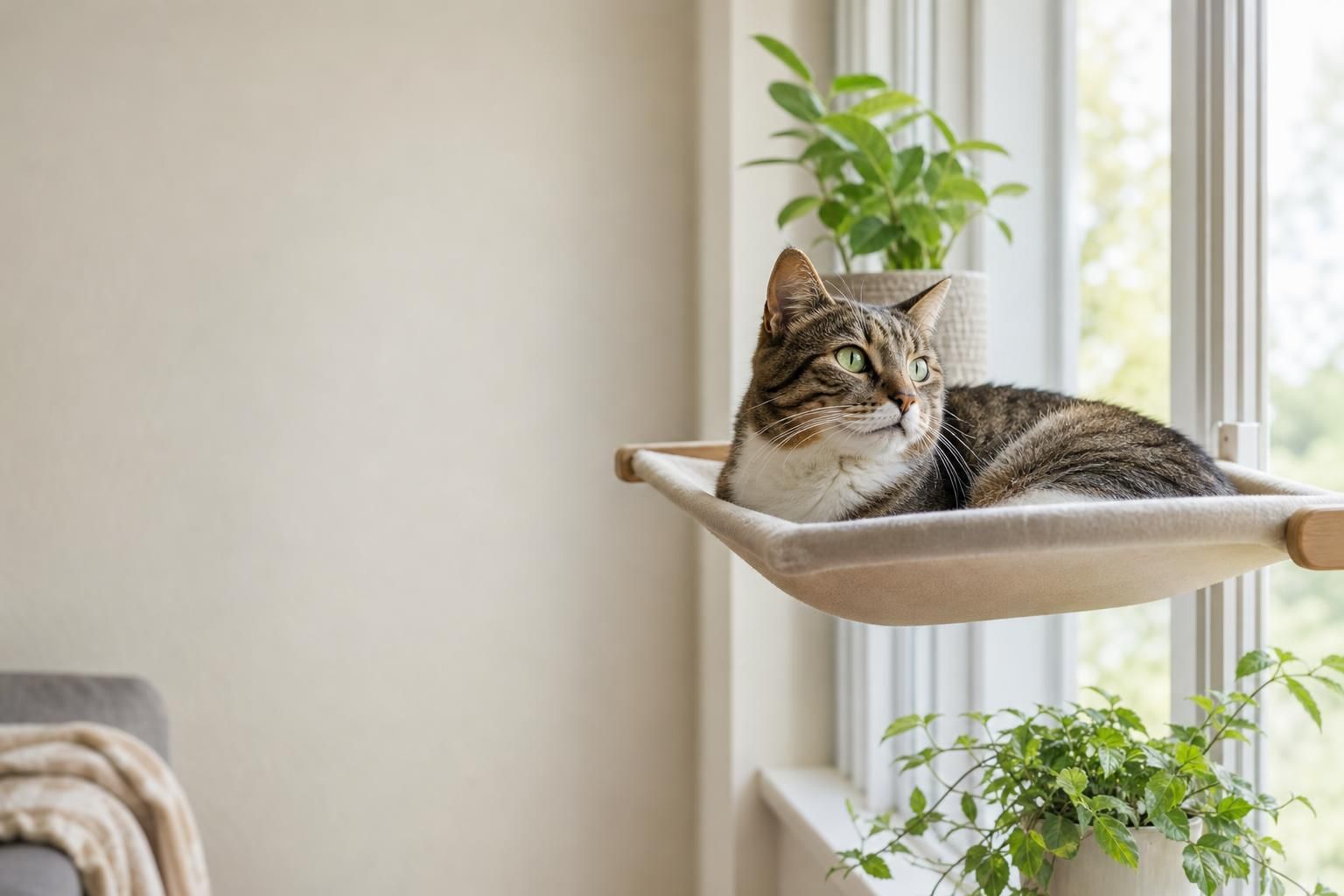
A cat hammock is a low-footprint, usually window- or wall-mounted resting spot best for lounging and sunbathing, while a cat tree is a freestanding vertical structure built for climbing, scratching, and claiming territory. If your cat mostly wants a warm perch to nap in, a hammock wins on space and cost; if your cat is active and craves height or multiple levels, a tree earns its footprint. Many multi-cat homes end up using both for different reasons.
Key takeaways
- A hammock suits small spaces and cats who prefer sunbathing over climbing; a tree suits active cats who need vertical territory.
- Cat trees generally cost more and take up more floor space, but they double as scratching posts and give multiple cats separate levels.
- Hammocks mount to windows or walls and need periodic weight-limit and hardware checks; trees need sturdy bases so they don't tip.
What Each Option Actually Does
A cat hammock is essentially a fabric platform suspended from suction cups on a window, hung from a wall bracket, or built into the frame of a cat tree itself. It gives a cat an elevated, often sun-warmed spot without requiring floor space. A cat tree is a multi-level structure — typically carpeted or sisal-wrapped posts with platforms, cubbies, and sometimes a hammock built in — designed for climbing, scratching, perching, and in multi-cat households, spacing cats out vertically.
The core difference is purpose: hammocks are about rest, trees are about activity plus rest. Cats are natural climbers, and domestic cats retain strong instincts to seek height for safety and observation, which is why vertical space is often recommended alongside horizontal territory in behavior guidance from veterinary and animal welfare organizations such as the ASPCA.
Space, Cost, and Maintenance Compared
| Factor | Cat Hammock | Cat Tree |
|---|---|---|
| Floor footprint | Minimal to none (window/wall-mounted) | Moderate to large (2–4 sq ft base typical) |
| Typical cost range | Lower | Higher |
| Scratching surface included | Rarely | Usually (sisal posts) |
| Best for multi-cat homes | One cat at a time per unit, usually | Multiple cats, separate levels |
| Maintenance | Check suction cups/straps regularly | Vacuum carpet fibers, check base stability |
| Mobility | Easy to relocate or remove | Heavier, harder to move once assembled |
When a Hammock Makes More Sense
A hammock is the better pick in apartments, rentals, or rooms where floor space is tight. Window-mounted versions turn an underused pane into prime real estate, which matters because cats spend a large portion of their day resting and will gravitate toward warm, bright spots. Suction-cup models typically rely on the glass surface bearing the cat's full weight, so checking that suction cups are rated for your cat's size and re-seating them periodically is a real safety step, not an optional one.
Hammocks also work well for older or less mobile cats who want height without a climb, or for introducing a new resting spot gradually. If you're easing an anxious cat into any new sleeping surface, the same gradual, low-pressure approach used when introducing a new bed to a nervous cat applies just as well to a hammock — place it near existing favorite spots first rather than isolating it in a new room.
When a Cat Tree Makes More Sense
A tree is the stronger choice for kittens, young adult cats, or any cat that scratches furniture, since the sisal posts redirect that instinct onto an appropriate surface. In multi-cat households, vertical separation reduces tension because cats can avoid direct confrontation by choosing different levels — a documented stress-reduction strategy referenced in feline behavior resources from organizations like the American Association of Feline Practitioners.
Trees also tend to double as play structures. A cat that paws at dangling toys or stalks from a perch gets both exercise and the satisfaction of "hiding and pouncing," which is part of why some cats bring toys to a favorite high spot — the same instinct discussed in why cats bring toys to their owners. Stability matters here: a tree with a narrow base can tip under an adult cat's full-speed jump, so a wide, weighted base is worth prioritizing over height alone.
Signs Your Cat Will Prefer One Over the Other
- Sunbathes often in window light → leans hammock.
- Scratches furniture or doorframes → leans tree (built-in scratching posts).
- Lives with other cats or pets → leans tree (more separate territory).
- Older, arthritic, or less agile → leans hammock or a tree with low, wide steps.
- Limited floor space → leans hammock or a compact wall-mounted tree.
Ai and Dudu, the two cats who test products before anything goes up for sale at Ziva Paws, split almost exactly along these lines in practice: one gravitates to window perches for an afternoon nap, the other treats any elevated platform as a launch point for toy ambushes. That kind of split behavior is common and is a good argument for not assuming one cat's preference applies to every cat in the house.
Safety and Fit Considerations
Whichever you choose, check weight capacity against your cat's actual size rather than a generic "fits most cats" label — the same reasoning behind using real inch-based measurements instead of vague size tiers when fitting a sweater to a cat's chest and back length. Zivapaws' own bedding and furniture collection lists hammocks, nests, and scratcher lounges with sizing detail so owners aren't guessing whether a platform will hold their cat comfortably.
Inspect hardware on either option every few weeks: suction cups lose grip over time, and tree joints can loosen with repeated jumping. A loose joint on a tall tree is a bigger fall risk than a dropped suction cup, since the platforms sit higher off the ground.
Frequently Asked Questions
Q: Can a cat hammock replace a cat tree entirely?
For a calm, low-energy cat with no scratching habit, a hammock alone can be enough. For an active cat or a multi-cat household, a tree's scratching surface and vertical separation usually make it worth the extra space.
Q: How much weight can a window-mounted cat hammock hold?
Weight limits vary by product and mounting hardware, so check the manufacturer's stated capacity against your cat's weight rather than assuming all hammocks hold the same load.
Q: Do cat trees help reduce scratching on furniture?
Yes — sisal-wrapped posts give cats an appropriate surface for the scratching instinct, which can reduce damage to couches and doorframes when the tree is placed in a spot the cat already frequents.
Q: Is it safe to put a cat hammock near a radiator or heater?
Avoid placing any hammock or bed directly against a heat source, since fabric can overheat or pose a fire risk; a sunny window spot away from heating elements is safer.
Q: Can two cats share one cat tree?
Yes, if the tree has enough separate platforms — cats generally prefer having their own space rather than sharing one perch, so a tree with multiple levels works better than a single-platform design for multi-cat homes.