Body Cam for Contractors: What to Look For and Why
Key takeaway
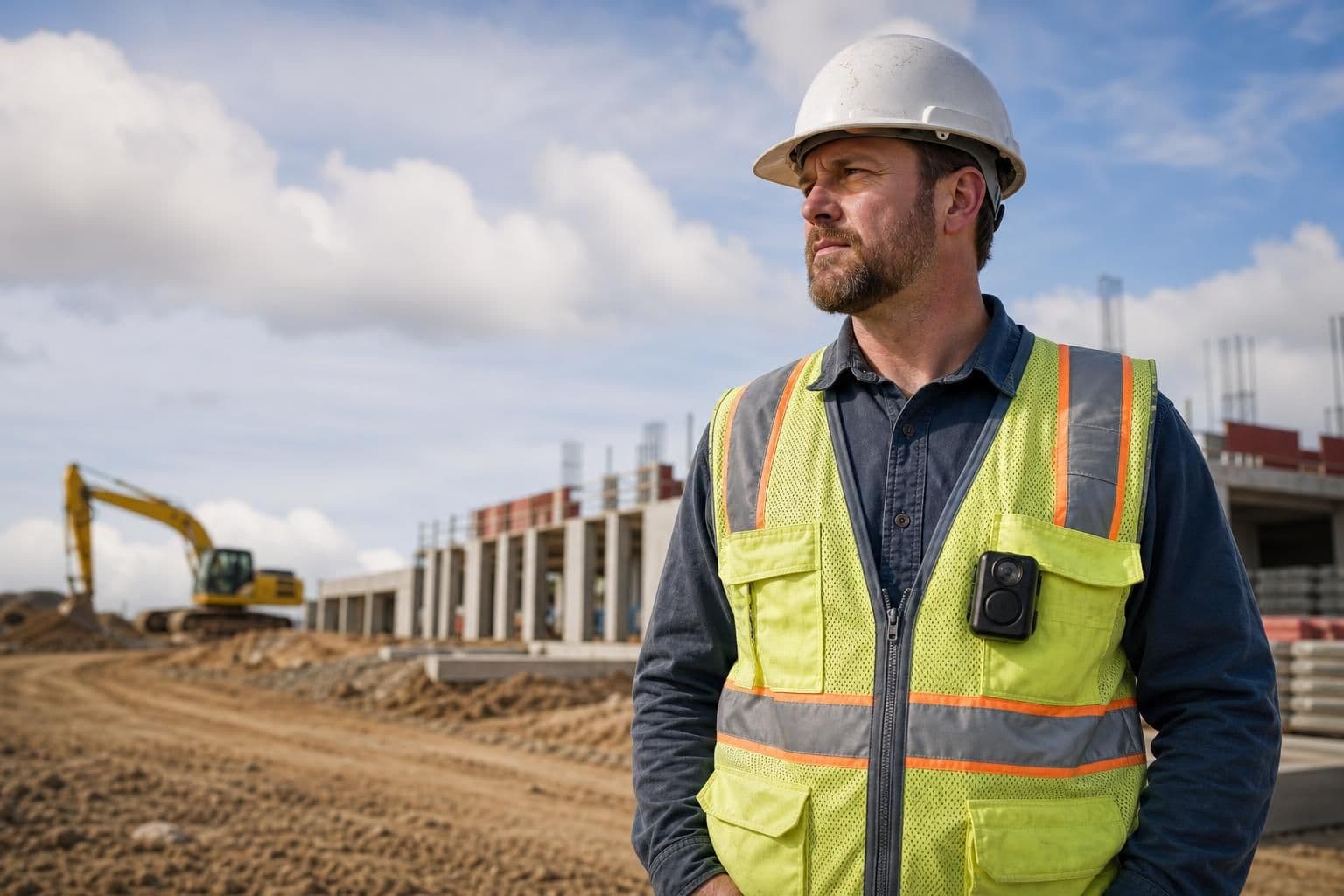
A body cam for contractors is primarily a documentation tool: it records walkthroughs, finished work, and site conditions so there's visual proof if a client disputes a job later. The right one should record in clear resolution, stay out of your way while you work, and be simple to turn on between tasks. Beyond the camera itself, contractors also need to understand local recording and consent laws before they start filming clients, tenants, or other workers.
Key takeaways
- Resolution and camera angle matter more than extra features — a rotatable lens lets you aim at a wall, ceiling, or fixture without removing the unit.
- Recording laws differ by state and country, especially around audio and consent — check them before you record anyone besides yourself at work.
- A hands-free, easy-to-start camera is more useful on a job site than one with a complicated setup process, since you often need to hit record with gloves on.
Why contractors are adding body cameras to their toolkit
Contractors deal with disputes that come down to "he said, she said" — did the drywall crack before the job started, was the fixture already loose, did the client approve that change. A timestamped video record settles those arguments faster than a written estimate alone. It also documents site hazards (exposed wiring, unstable flooring) before work begins, which matters if a safety question comes up later. The U.S. Occupational Safety and Health Administration requires employers to maintain a workplace free of recognized hazards under the General Duty Clause, and photo or video records of site conditions can support that kind of documentation, even though OSHA itself doesn't mandate body cameras.
What to look for in a body cam for contractor work
Not every body camera is built for construction or trade work. A few things matter more on a job site than in an office or vehicle:
| Feature | Why it matters for contractor work | What to check |
|---|---|---|
| Recording resolution | Clear footage makes it easier to show finished work or pre-existing damage | The 4K Rotatable Body Camera records in 4K |
| Camera positioning | A rotatable body lets you angle the lens at a wall, ceiling, or fixture without unclipping the camera | Rotatable design for flexible angle |
| Wear style | Hands stay free for tools, ladders, and materials | Wearable, hands-free format |
| Setup time | Less time fiddling with settings between jobs | Easy operation and simple setup |
| Battery life and storage capacity | Determines how long you can record in a single shift | Not listed here — confirm current specs on the product page before buying |
| Shipping | Know when it'll arrive before a scheduled job starts | Free express shipping, 1-2 business days processing, estimated 7-12 business day arrival |
If you're comparing several models side by side, the 4K body camera buying guide covers the broader checklist — resolution, mounting, and field of view — in more depth.
Is it legal for contractors to wear a body camera on a job?
This is general information, not legal advice, and laws vary by state and country — check your local statutes or a licensed attorney before recording clients, tenants, or coworkers. In the United States, most states allow recording video of your own work without consent since there's no reasonable expectation of privacy in areas like a driveway, yard, or open work zone. Audio is a separate issue: about a dozen states require all-party consent to record a conversation, meaning everyone being recorded has to agree, while the rest are one-party consent states where only the person recording needs to agree. The Reporters Committee for Freedom of the Press maintains a state-by-state guide to recording laws, and Justia publishes summaries of state wiretapping statutes if you want to look up your specific state.
A few practical habits keep contractors on safer ground regardless of location:
- Record video of the work area and your own labor, not people's private conversations.
- If a client or tenant will be in frame and talking, consider letting them know you're recording for documentation purposes.
- Never use a hidden or disguised camera to capture someone without their knowledge — that crosses from documentation into surveillance in most jurisdictions.
If you work inside occupied homes or rentals, the considerations overlap with what's covered in what landlords should know before buying a body camera, since both situations involve recording inside someone else's property.
How to wear and use a body camera on-site
Placement affects both the footage and your comfort while working. A camera clipped too low gets blocked by tools, ladders, or your own arms; one mounted too high picks up more ceiling than workspace. For a full breakdown of placement and angle options, see how to wear a body camera for the best angle. On a job site specifically, a few habits help:
- Start recording before you walk the client through the site, not after a problem comes up.
- Do a quick angle check in the first few minutes of a job to confirm the frame captures your work area.
- Keep the camera on a consistent spot on your body (chest or shoulder strap) so footage stays comparable across jobs.
Because the device is wearable and hands-free, it's designed to stay out of the way of actual tool use, which matters more on a ladder or crawlspace than in an office setting.
Body cam vs. other ways contractors document work
Phones and dash cams can also record job sites, but neither is built to be worn while working. A phone needs to be held or propped somewhere static, and a dash cam only sees what happens near the vehicle, not inside the house or on the roof. A body camera is the only option of the three that moves with you and keeps both hands free for tools. For a closer look at how body cameras differ from dash and action cameras more broadly, the comparison in body camera vs. action camera breaks down the trade-offs.
Frequently Asked Questions
Q: Do contractors need a license or permit to wear a body camera?
No special license is required to wear a body camera in most U.S. states, since it's treated the same as carrying a phone or camera. Some states do have recording consent rules that affect what you can capture, particularly for audio, so it's worth checking your state's statute before using one regularly.
Q: Can a contractor record inside a client's home without asking first?
Video of your own work area is generally allowed in most states, but recording audio of a conversation may require the other person's consent depending on the state. Letting the client know you're documenting the job for your own records is a simple way to avoid misunderstandings.
Q: What resolution should a body camera for contractor work record in?
4K is a common baseline for documentation work because it keeps details like cracks, wiring, or material defects readable when you zoom in later. The 4K Rotatable Body Camera records at 4K and has a rotatable body for adjusting the angle without removing it.
Q: Is a body camera better than a phone for documenting a job site?
A body camera stays on your body and keeps both hands free, while a phone needs to be held or set down to record, which isn't practical on a ladder or in tight spaces. For contractors who need continuous hands-free footage, a wearable camera generally fits the work better.
Q: Are hidden cameras legal for contractors to use at a job site?
Using a hidden or disguised camera to record someone without their knowledge is not something we recommend, and it can violate privacy and wiretapping laws depending on the state. If you're concerned about being secretly recorded on a job site yourself, a hidden camera detector is a separate tool built to check for that, rather than something for recording others covertly.