How to Choose a Countertop for a Wet Bar
Key takeaway
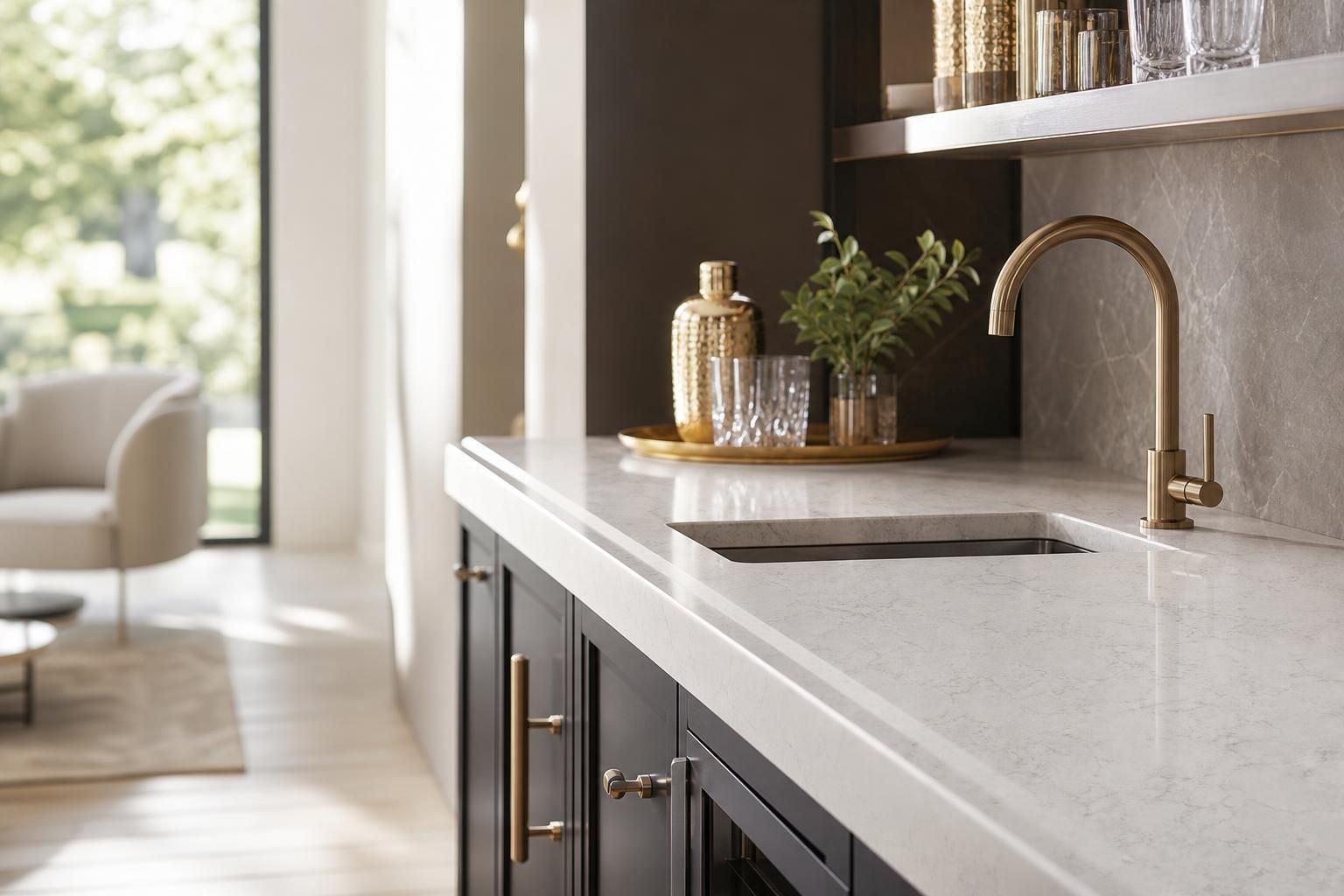
The best countertop for a wet bar is a non-porous, stain-resistant material like quartz or sealed granite that can handle constant splashes, citrus juice, and standing water around the sink without staining or etching. Choose a surface that matches the water exposure the bar actually gets — a small ice-and-mixer station needs less protection than a bar that doubles as a prep sink. For Oahu homes, humidity resistance matters as much as stain resistance, since moisture sits in the air year-round rather than just splashing the counter occasionally.
Key takeaways
- Pick a non-porous surface (quartz, or a sealed granite/stone) for any wet bar that sees regular splashes or citrus acid.
- Plan the sink and faucet layout before ordering the slab — cutout location affects usable counter space more than color does.
- A rounded or eased edge profile sheds water better and is safer around a bar where drinks and ice are handled standing up.
Match the Material to How the Bar Will Be Used
Not every wet bar gets the same abuse. A small butler's pantry with an ice maker and a few bottles sees occasional splashes, while a bar used daily for cutting limes, mixing drinks, and rinsing glassware takes constant moisture and acid contact. Quartz is engineered with resins that make it essentially non-porous, so it doesn't need sealing and resists staining from wine, citrus, and food dye better than natural stone left unsealed. Granite and other natural stones can work well too, but they're porous at a microscopic level and need periodic sealing to keep moisture and oils from soaking in — something worth factoring into long-term maintenance for a vacation rental where upkeep happens between guest turnovers.
Quartz vs. Granite vs. Other Surfaces for a Wet Bar
Quartz surfaces are manufactured from roughly 90-93% crushed natural quartz combined with resins and pigments, which is what gives them their consistent color and non-porous surface, according to the Natural Stone Institute. Granite, by contrast, is 100% natural stone, so veining and color vary slab to slab, and it requires sealing to stay stain-resistant over time. Some homeowners also consider solid surface or laminate for a secondary wet bar, but these scratch and burn more easily than quartz or stone and tend to show wear faster in a spot where ice scoops, bottle openers, and glassware get set down constantly.
If you're already comparing stone options for a kitchen island or bathroom vanity, it's worth reviewing broader bathroom countertop ideas for material comparisons that apply just as well to a wet bar — the moisture and staining concerns overlap closely.
Plan the Sink, Faucet, and Drainage Area First
The sink is usually the first thing to design around on a wet bar, because its size and placement determine how much usable counter space is left for mixing drinks or setting out glasses. A bar sink is typically smaller than a kitchen sink, but the cutout still needs clearance for the faucet, a drying mat or small drainboard area, and enough depth for ice buckets or decanters. If you're pairing quartz with an undermount sink, the installer needs the sink on hand before fabrication so the cutout is cut to the exact model — a detail covered in more depth in how to choose a kitchen sink for quartz countertops. Getting this sequence right avoids a redo if the sink doesn't fit the planned cutout.
Edge Profiles and Overhang for a Bar Counter
Edge profile matters more at a wet bar than almost anywhere else in the house because people stand or lean at it, set drinks down quickly, and wipe up spills often. A rounded, bullnose, or eased edge sheds water toward the sink instead of letting it pool in a sharp corner, and it's gentler on forearms and elbows than a squared-off edge. If the bar has a seating overhang for stools, the counter typically needs 10 to 12 inches of overhang to allow knee clearance, and that overhang needs proper support — usually corbels or a steel bracket system — so the slab doesn't flex or crack under weight. For a closer look at how much overhang works for different bar and island configurations, see how to choose a countertop overhang size.
Color and Finish That Hold Up to Island Humidity
Darker colors and busy patterns hide water spots, lime residue, and the occasional wine ring better than a stark white slab, which shows every smudge under bar lighting. Matte and honed finishes also show fewer fingerprints and water marks than high-gloss polished surfaces, though polished quartz is easier to wipe clean of sticky syrups and juice. In Hawaii's climate, where indoor humidity regularly runs higher than mainland averages, condensation on cold glassware and ice buckets is a near-daily occurrence, so a finish that doesn't show every water ring will hold up better between cleanings. The U.S. Environmental Protection Agency notes that indoor humidity above roughly 60% encourages moisture buildup on hard surfaces, which is a useful benchmark for why ventilation near a wet bar — not just the countertop material — matters for long-term durability.
Matching the Bar to Your Cabinets and Kitchen Design
A wet bar usually sits near or within view of the main kitchen, so the countertop and cabinet finish should feel like an intentional extension rather than an afterthought. Pairing the bar's stone with a matching or complementary backsplash ties the space together visually — a principle covered in how to choose a backsplash color for white cabinets that applies directly to bar nooks finished in white shaker cabinetry. If the wet bar is being designed specifically as a hosting feature, it's also worth thinking through traffic flow and counter space the same way you would for the main kitchen, as outlined in how to design a kitchen for entertaining guests.
Pricing for a wet bar slab varies by material, edge detail, and sink cutout complexity, and Hawaii costs generally run above mainland averages because stone and fabricated quartz are shipped in and labor rates reflect the islands' cost of living. A local showroom visit or in-home consultation is the most reliable way to get an accurate number for a specific layout.
Frequently Asked Questions
Q: Is quartz or granite better for a wet bar countertop?
Quartz is generally lower-maintenance for a wet bar because it's non-porous and doesn't require sealing, which matters in a spot that sees frequent splashes and citrus contact. Granite can perform just as well if it's properly sealed and resealed on schedule, but it takes more upkeep over time.
Q: Does a wet bar countertop need to match the kitchen countertop?
It doesn't need to match exactly, but choosing a complementary color or the same material family usually looks more cohesive, especially when the bar is visible from the main kitchen or living area. Many homeowners use the same slab family in a different finish or edge profile to create subtle distinction.
Q: How much overhang should a wet bar counter have for stool seating?
A typical seating overhang is 10 to 12 inches to allow knee clearance, but any overhang beyond about 10 inches usually needs additional support brackets or corbels to prevent the slab from cracking under weight.
Q: Can laminate work for a wet bar instead of stone?
Laminate can work for a low-use wet bar, but it scratches, burns, and can delaminate at seams faster than quartz or sealed stone when exposed to regular moisture and heat from appliances like warming trays or hot kettles.
Q: Does humidity affect how a wet bar countertop performs over time?
Humidity itself doesn't damage non-porous surfaces like quartz, but it does increase condensation on glassware and ice containers, which means the counter sees water contact more often even without active use. Good ventilation near the bar reduces how often that moisture sits on the surface.